







What's Happening?
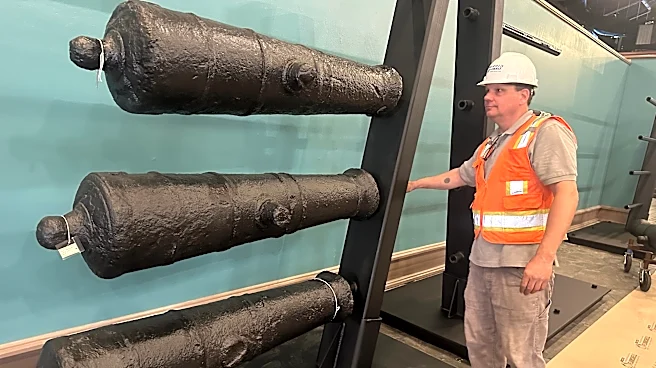
A collection of 17 cannons, believed to have sunk during the American Revolution, has been transported to the Savannah History Museum in Georgia. These artifacts were discovered in 2021 during a dredging project by the U.S. Army Corps of Engineers. Initially
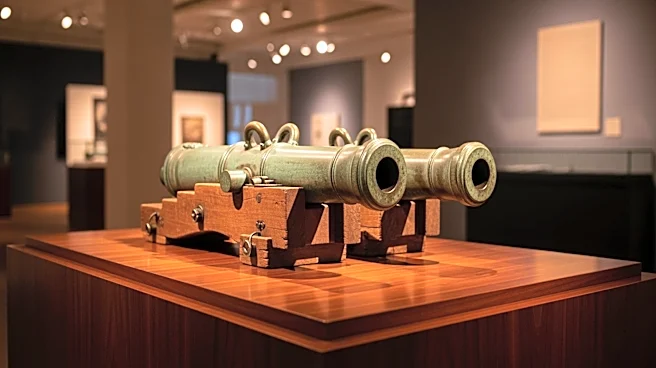
thought to be from the Civil War, further research indicated they are likely from the late 1700s, associated with the British occupation of Savannah. The cannons underwent extensive preservation work at Texas A&M University before being returned to Georgia. The museum plans to feature these cannons in a new exhibit highlighting Savannah's role in the American Revolution, set to open around the Fourth of July.
Why It's Important?
The discovery and preservation of these cannons provide a tangible connection to a pivotal moment in American history, offering insights into the military strategies and international alliances of the time. The exhibit will enhance public understanding of the Revolutionary War, particularly the siege of Savannah, one of the conflict's bloodiest battles. This initiative also underscores the importance of archaeological efforts in uncovering and preserving historical artifacts, contributing to cultural heritage and education.
What's Next?
The Savannah History Museum is preparing to unveil the new exhibit, which will coincide with the celebration of America's 250th birthday. This event is expected to attract historians, educators, and tourists, fostering a deeper appreciation for the region's historical significance. The museum's efforts may inspire further archaeological investigations in the area, potentially leading to more discoveries that could enrich the narrative of the American Revolution.