





What's Happening?
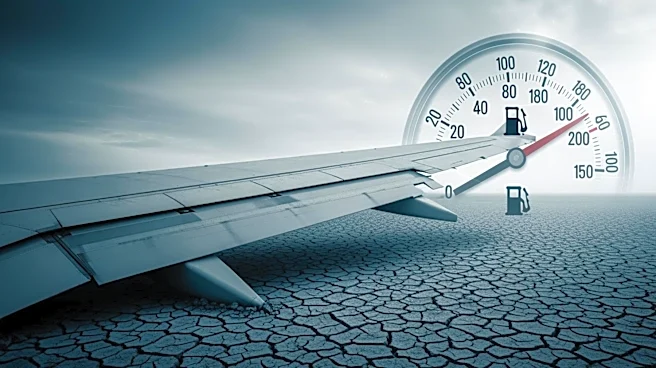
The aviation industry is experiencing a severe crisis due to a global fuel shortage caused by the closure of the Strait of Hormuz following the outbreak of hostilities in the Middle East. This chokepoint, through which 20% of the world's oil flows, has
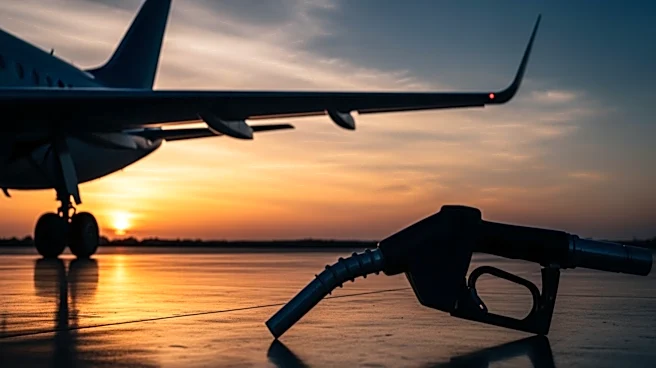
been effectively closed, leading to what the International Energy Agency describes as the largest supply disruption in history. The shortage has resulted in skyrocketing refined energy costs, with jet fuel prices nearly doubling. Major international airports are scrambling for reserves, and airlines are facing billions in losses due to the failure of traditional fuel hedging strategies.
Why It's Important?
The fuel crisis is reshaping the economics of air travel, with significant implications for the aviation industry and global travel. Airlines are forced to increase ticket prices, introduce fuel surcharges, and reduce capacity, which could make air travel a luxury once again. The crisis exposes the vulnerability of the aviation sector to geopolitical events and highlights the need for alternative fuels and propulsion technologies. The situation could lead to a permanent shift in the industry, with a focus on sustainable aviation fuel and a move away from ultra-cheap air travel.
What's Next?
The aviation industry is likely to accelerate its push for sustainable aviation fuel and alternative technologies to reduce dependency on volatile oil markets. Airlines may restructure their business models to focus on profitability rather than volume, leading to fewer flights and higher fares. The industry will closely monitor geopolitical developments in the Middle East, as a resolution could alleviate some of the immediate pressures. However, the long-term outlook suggests a potential shift in how air travel is priced and consumed.