




What's Happening?
Michigan Governor Gretchen Whitmer and the director of the Michigan Department of Environment, Great Lakes, and Energy (EGLE) have announced a new review of permits previously granted to Enbridge for its proposed Line 5 oil tunnel project. The permits,
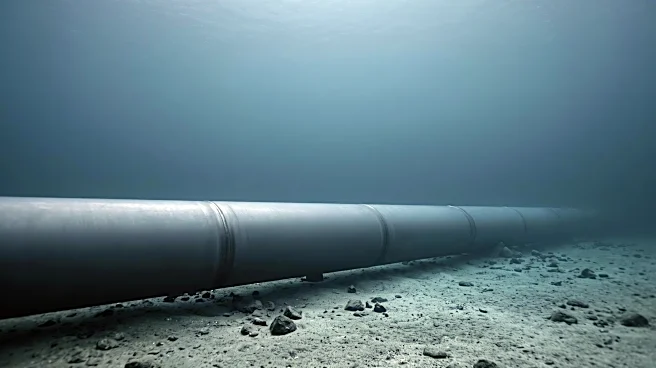
secured by Enbridge in July, were intended for the construction of an oil tunnel beneath the Straits of Mackinac. In a letter to Enbridge President and CEO Gregory Ebel, Governor Whitmer also urged the company to initiate a planned and orderly transition to an alternative solution for both the existing dual pipelines and the proposed tunnel. This decision follows concerns raised by Tribal Nations, local communities, and a recent Michigan Supreme Court decision, which suggested that EGLE should not have issued the original permits. Earthjustice Managing Attorney Debbie Chizewer stated that the tunnel project would have jeopardized the Great Lakes' freshwater supply and endangered tribal lifeways for corporate profit, commending Governor Whitmer's decision.
Why It's Important?
This action is significant for environmental protection and Indigenous rights in the Great Lakes region. The Straits of Mackinac are a critical ecological area and hold deep cultural and spiritual importance for Tribal Nations. The proposed Line 5 tunnel project has been a point of contention due to the potential for catastrophic oil spills, which could devastate the largest supply of freshwater in the country and severely impact the traditional lifeways and treaty-protected resources of Indigenous communities. By ordering a new review and advocating for alternatives, Governor Whitmer is responding to sustained pressure from environmental groups and Tribal Nations, signaling a potential shift towards prioritizing environmental safety and Indigenous sovereignty over fossil fuel infrastructure. This move could set a precedent for how large-scale energy projects are evaluated in environmentally sensitive areas, particularly concerning their impact on Indigenous populations.
What's Next?
The new review by EGLE will re-evaluate the permits for the Line 5 tunnel project, which could lead to their revocation or significant modification. Enbridge is now under pressure from the state to develop and implement alternatives to both the existing pipelines and the proposed tunnel, suggesting a long-term shift away from the current infrastructure. Tribal Nations and environmental organizations will likely continue to monitor the review process closely and advocate for the complete decommissioning of Line 5. The outcome of this review could influence future energy infrastructure decisions in Michigan and potentially other states with similar environmental and Indigenous concerns. The focus will be on whether a viable and safe alternative to the current oil transport method can be found and implemented, ensuring the protection of the Great Lakes.
Beyond the Headlines
This development highlights the ongoing tension between economic interests, environmental conservation, and Indigenous rights in the United States. The Line 5 controversy is not just about an oil pipeline; it represents a broader struggle over resource management, the recognition of treaty rights, and the transition to more sustainable energy solutions. The call for alternatives to the pipeline underscores a growing societal demand for energy infrastructure that minimizes environmental risks and respects the sovereignty of Indigenous communities. This situation could also influence corporate responsibility standards for energy companies operating in sensitive ecological areas, pushing them towards more transparent and environmentally conscious practices. The long-term implications could include a re-evaluation of existing pipeline infrastructure across the country and increased legal and political challenges to projects that pose significant environmental or cultural risks.