





What's Happening?
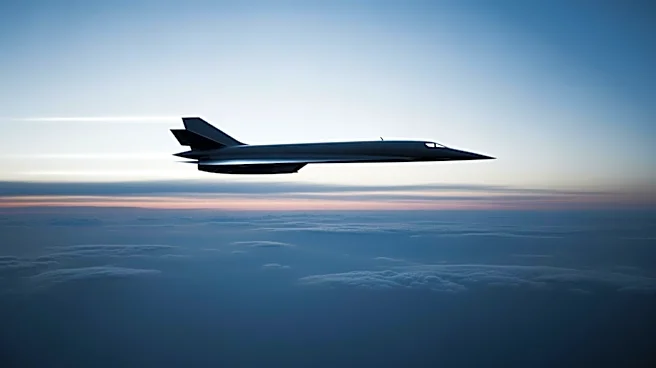
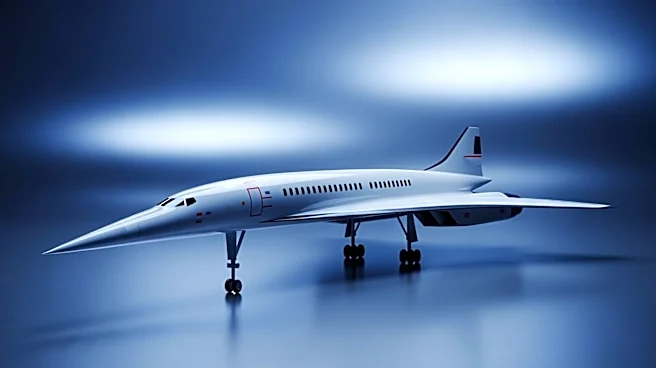
NASA's X-59, an experimental supersonic research aircraft, has successfully completed a significant milestone by flying with its wheels up over the Mojave Desert in California. This achievement marks a crucial step in the aircraft's test campaign, which
aims to demonstrate the ability to fly faster than the speed of sound without producing loud sonic booms. The X-59 has reached its highest and fastest flights to date, expanding its operational range. Future tests will focus on evaluating the aircraft's control systems, structural dynamics, and various subsystems, including hydraulics and avionics. The aircraft features an eXternal Vision System, replacing the traditional forward windscreen with a series of cameras connected to a cockpit display.
Why It's Important?
The development of the X-59 is part of NASA's Quesst mission, which seeks to revolutionize supersonic travel by reducing the noise associated with sonic booms. If successful, this technology could pave the way for commercial supersonic flights over land, significantly reducing travel times. The ability to fly quietly at supersonic speeds could transform the aviation industry, offering faster and more efficient air travel options. The X-59's progress in testing is a critical step toward achieving these goals, potentially leading to new regulations and standards for supersonic flight.
What's Next?
NASA will continue to conduct test flights of the X-59, focusing on refining its performance and ensuring the reliability of its systems. The data collected from these tests will be used to validate the aircraft's design and its ability to minimize sonic booms. As the project advances, NASA will engage with regulatory bodies and industry stakeholders to discuss the implications of quiet supersonic travel and explore potential commercial applications. The success of the X-59 could lead to broader acceptance and implementation of supersonic technology in the aviation sector.