






What's Happening?
Dena Maldonado, a California business owner, has announced her candidacy for California’s 14th Congressional District. In an interview with 'The Ag Meter' host Nick Papagni, Maldonado discussed her motivations for entering politics, highlighting issues
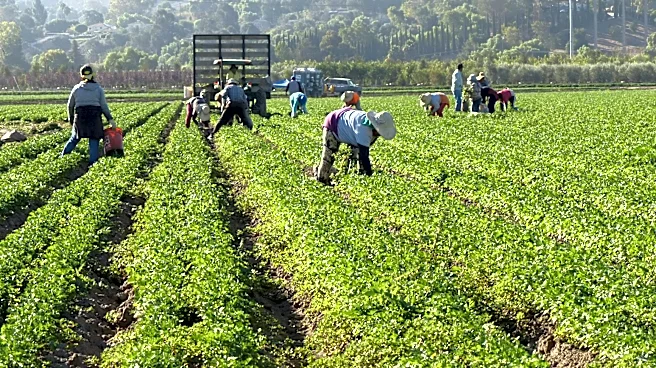
such as the struggles facing agriculture, rising crime rates, and government spending. Maldonado, who has a background in business and agriculture, emphasized the need for more working-class citizens to engage in politics. She expressed concerns about the regulatory burdens on farmers, citing high fertilizer prices, freight costs, and water issues as significant challenges. Additionally, Maldonado addressed broader societal issues, including crime and homelessness, advocating for cleaner streets and stronger law enforcement. She criticized government spending and called for elected officials to have real-world financial experience. Maldonado encouraged Californians to become more politically engaged and to focus on solutions rather than political divisions.
Why It's Important?
Maldonado's candidacy highlights significant issues facing California, particularly in agriculture and public safety. Her focus on reducing regulatory burdens on farmers is crucial for maintaining California's status as a leading agricultural producer. The emphasis on crime and homelessness addresses growing concerns among residents about safety and quality of life. By advocating for political engagement and bipartisan dialogue, Maldonado aims to bridge political divides and foster collaborative solutions. Her business background and focus on financial accountability could appeal to voters seeking practical governance. The outcome of her campaign could influence policy directions in California, particularly in areas related to agriculture, public safety, and economic management.
What's Next?
As Maldonado's campaign progresses, she will likely continue to engage with voters and stakeholders across California's 14th Congressional District. Her focus on grassroots support suggests that she will prioritize community engagement and volunteerism. The upcoming elections will determine whether her platform resonates with voters, potentially impacting the political landscape in California. Key stakeholders, including farmers, business owners, and community leaders, may respond to her proposals, influencing public discourse on the issues she has raised. The campaign's success could also encourage other working-class individuals to consider political involvement, potentially diversifying the political representation in the state.