


What's Happening?
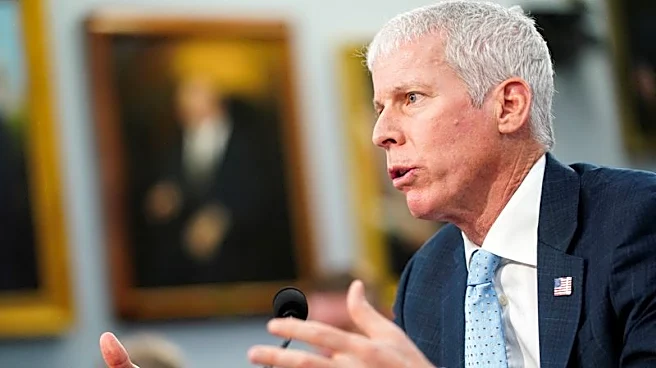
Jennifer Hegseth, wife of Defense Secretary Pete Hegseth, has drawn criticism for her expansive and unusual role within the Pentagon. Former Pentagon spokesperson John Ullyot described her involvement as "bonkers," stating that a defense secretary should
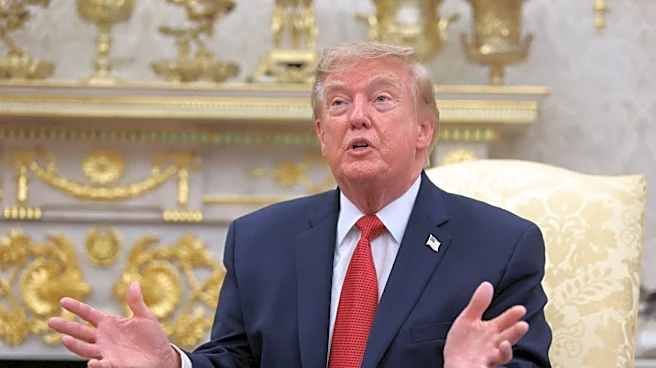
not involve his wife in sensitive official duties. Concerns first arose when The Wall Street Journal reported that Jennifer Hegseth attended two meetings with foreign military counterparts where sensitive information was discussed. Subsequently, it was revealed that Secretary Hegseth used his personal phone to send specific details about an imminent U.S. military strike to a group chat that included his wife. The Washington Post also reported that she had taken over media engagement responsibilities from Defense Department professionals. More recently, President Trump announced that Jennifer Hegseth, a former Fox News employee like her husband, would lead a new commission focused on improving the lives of military spouses and families. Despite the criticism, a Pentagon spokesperson defended her role, calling her "a vital asset and a true force multiplier for our mission," and indicated plans for her even deeper involvement in the future.
Why It's Important?
Jennifer Hegseth's extensive involvement in the Defense Department raises significant questions about ethics, national security protocols, and the appropriate boundaries between personal and official roles within the U.S. government. Her presence in sensitive meetings and access to classified information, particularly through unofficial channels like a personal group chat, could compromise national security and create potential conflicts of interest. The blurring of lines between a spouse's role and official government functions can undermine the professionalism and integrity of the Pentagon, setting a concerning precedent for future administrations. This situation also highlights potential issues with accountability and transparency, as a spouse is not subject to the same oversight and vetting processes as appointed officials. The defense of her role by a Pentagon spokesperson, coupled with plans for increased involvement, suggests a normalization of this unconventional arrangement, which could further erode public trust in the impartiality and security of defense operations.
What's Next?
The ongoing controversy surrounding Jennifer Hegseth's role is likely to continue generating scrutiny from media, ethics watchdogs, and potentially Congress. Calls for greater transparency and clarification of her responsibilities and access to sensitive information may intensify. Depending on the level of public and political pressure, there could be demands for formal investigations into potential breaches of protocol or conflicts of interest. The establishment of a new commission led by her, while seemingly benign, could also become a focal point for critics who view it as an expansion of an already problematic influence. The situation may prompt the Defense Department to issue clearer guidelines regarding the involvement of spouses in official capacities, particularly concerning classified information and sensitive diplomatic engagements. The long-term implications could include a re-evaluation of ethical standards for high-ranking officials and their families within the U.S. government.
Beyond the Headlines
The controversy surrounding Jennifer Hegseth's role in the Pentagon delves into the deeper implications of nepotism and the erosion of institutional norms within government. Beyond the immediate concerns of national security and ethics, her expansive involvement reflects a broader trend where personal relationships and loyalty to a political leader can supersede established protocols and professional qualifications. This can lead to a weakening of the meritocratic principles that underpin effective governance and create an environment where expertise is undervalued. The normalization of a spouse's direct involvement in sensitive government operations, particularly without formal appointment or accountability, challenges the very structure of democratic institutions designed to prevent undue influence and ensure public trust. This situation highlights the ongoing tension between a president's prerogative to appoint trusted individuals and the need to maintain the integrity and security of critical government functions, ultimately impacting the public's confidence in the impartiality and professionalism of the U.S. defense establishment.