







What's Happening?
A recent study conducted by Rutgers University, published in JAMA Pediatrics, indicates a potential link between a pregnant person's exposure to wildfire smoke and an increased risk of their child developing autism. The research found that children with
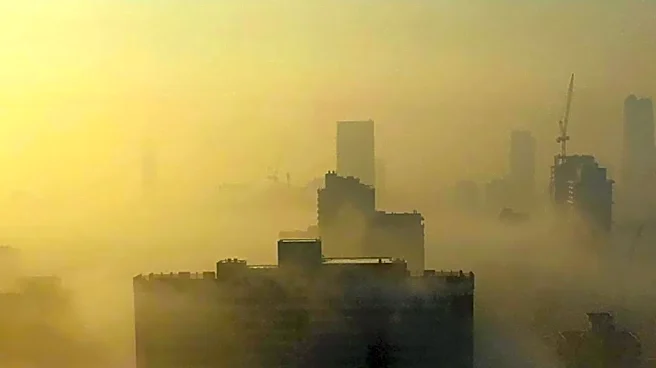
higher prenatal exposure to fine particulate matter (PM 2.5) from wildfire smoke were more likely to be diagnosed with autism later in life. This risk was particularly elevated during the second and third trimesters of pregnancy, although brain development is continuous throughout gestation. Stefania Papatheodorou, an OB-GYN and epidemiologist at the Rutgers School of Public Health and lead author of the study, highlighted that while the harmful effects of wildfire smoke are known, there has been limited evidence on its impact on neurodevelopment during childhood. PM 2.5 particles, which are 30 times smaller than human hair, can be easily inhaled, settle deep in the lungs, and enter the bloodstream, causing respiratory and cardiovascular problems in vulnerable populations.
Why It's Important?
This study is significant as it sheds light on a previously under-researched environmental factor that could influence neurodevelopmental outcomes. The findings suggest that wildfire smoke, an increasingly prevalent environmental hazard due to climate change, may pose a specific risk to fetal brain development. For obstetricians and healthcare providers, this research underscores the importance of considering environmental exposures like wildfires and extreme heat during routine prenatal care. It emphasizes the need for proactive measures to protect pregnant individuals, such as advising them to limit outdoor time when air quality is poor and to use home air purification systems. The study also highlights the broader public health implications of air quality, particularly for sensitive groups, and the necessity of monitoring air quality levels even when visible smoke is absent. Understanding these links can inform public health policies and clinical guidelines aimed at mitigating risks during pregnancy.
What's Next?
Following these findings, obstetricians are encouraged to integrate discussions about environmental hazards like wildfire smoke into prenatal care. Recommendations for pregnant individuals include regularly checking air quality alerts on their phones, limiting outdoor activities when air quality is poor, and utilizing home air purification systems. Further research may focus on understanding the specific mechanisms through which PM 2.5 impacts fetal neurodevelopment and identifying other environmental factors that could interact with wildfire smoke exposure. Public health campaigns could also be developed to raise awareness among pregnant populations about the risks associated with poor air quality and provide practical advice for protection. Policy discussions might also emerge regarding stricter regulations on emissions and more robust early warning systems for air quality degradation, especially in regions prone to wildfires.
Beyond the Headlines
The Rutgers study extends beyond immediate health recommendations, touching upon the broader societal and ethical implications of environmental health disparities. Communities frequently exposed to wildfires, often those in vulnerable geographic or socioeconomic positions, may face disproportionately higher risks of adverse pregnancy outcomes. This raises questions about environmental justice and the need for equitable access to resources that mitigate exposure, such as air purifiers and safe indoor spaces. Furthermore, the study contributes to a growing body of evidence linking environmental factors to neurodevelopmental disorders, prompting a re-evaluation of what constitutes a 'healthy' environment for pregnancy. It underscores the long-term health consequences of climate change, not just for the current generation but for future generations, emphasizing the urgency of climate action to protect public health.