
What's Happening?
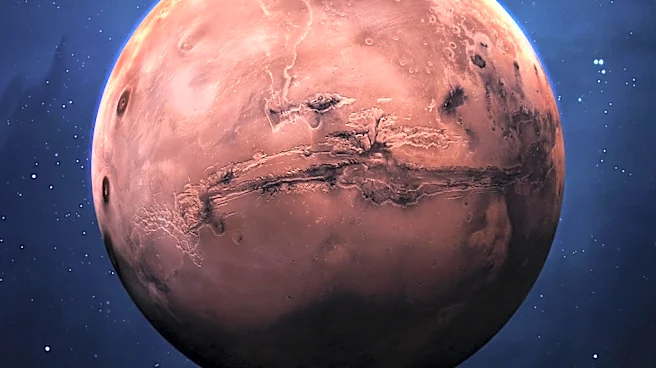
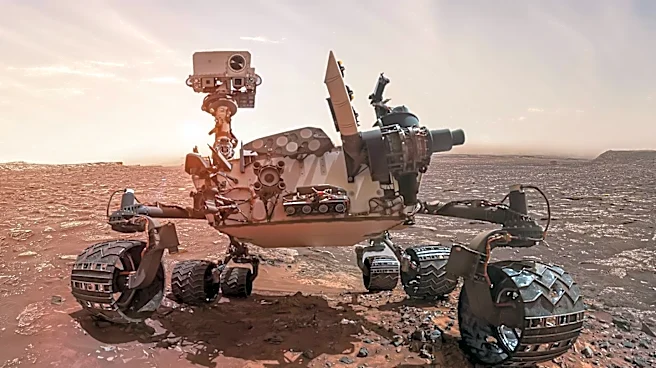
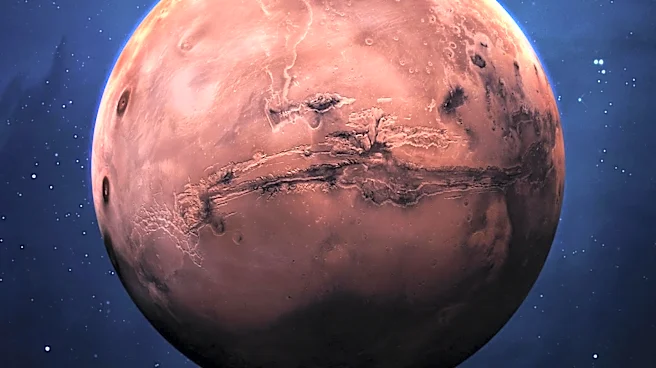
NASA's Mars Curiosity rover has recently transmitted images revealing a vast landscape characterized by polygon-like features. This marks the first instance of the Curiosity rover observing such terrain, although similar polygonal patterns have been documented
in other Martian regions. Scientists hypothesize that these features are ancient mud cracks, a theory supported by a 2023 study published in Nature. That study suggested these cracks formed during intense wet-dry cycles within Gale Crater, a period estimated to be between 3.8 and 3.6 billion years ago, known as the Noachian-Hesperian transition. Dr. Ashwin Vasavada, a Curiosity rover mission scientist at NASA’s Jet Propulsion Laboratory, expressed excitement about the discovery, stating that the team is meticulously analyzing the shapes and chemistry of these polygons for clues about their formation. While ground-level observations by Curiosity show polygons with diameters of approximately 4 to 8 centimeters, orbital observations by NASA’s High Resolution Imaging Science Experiment (HiRISE) have revealed much larger polygons, ranging from 15 to over 350 meters in diameter, in areas like Hellas Planitia, Noachis Terra, and Margaritifer Terra.
Why It's Important?
The discovery of these polygonal features by the Curiosity rover is significant for understanding Mars's ancient climate and geological history. The hypothesis that these are mud cracks suggests that Gale Crater, and potentially other regions of Mars, experienced prolonged periods of wet and dry conditions billions of years ago. This provides further evidence for the presence of liquid water on early Mars, which is crucial for assessing the planet's past habitability. The contrast between the small polygons observed by Curiosity and the much larger ones seen from orbit indicates diverse formation mechanisms across the planet, potentially including freeze-thaw cycles or tectonic stress in addition to mud cracking. Studying these features helps scientists reconstruct the environmental conditions of early Mars, offering insights into how the planet evolved from a potentially Earth-like climate to its current cold and dry state. This research contributes to the broader scientific goal of understanding planetary evolution and the potential for life beyond Earth.
What's Next?
Further analysis of the images and data collected by the Curiosity rover will be crucial in determining the precise formation processes of these newly discovered polygons. Scientists will continue to study their shapes, chemistry, and geological context to refine the mud crack hypothesis or explore alternative explanations. The ongoing mission of the Curiosity rover, along with data from other Martian orbiters like HiRISE, will likely provide more insights into the distribution and characteristics of polygonal terrains across Mars. Future missions to Mars, including potential sample return missions, could offer even more detailed information by allowing direct laboratory analysis of Martian soil and rock samples. This continued exploration and research will help scientists piece together a more complete picture of Mars's hydrological and climatic history, potentially leading to a better understanding of the conditions necessary for life.
Beyond the Headlines
The identification of extensive polygonal terrain on Mars, particularly those indicative of ancient mud cracks, carries profound implications for astrobiology and our understanding of planetary habitability. If these features are indeed fossilized mud cracks, they represent tangible evidence of a dynamic hydrological cycle on early Mars, characterized by periods of surface water evaporation and desiccation. Such conditions are considered favorable for the emergence and sustenance of microbial life. The presence of these features challenges the notion of a perpetually arid Mars, suggesting instead a planet that once harbored environments potentially conducive to life. This discovery deepens the scientific inquiry into whether life ever arose on Mars and informs the search for biosignatures in future missions. It also highlights the importance of studying geological formations as proxies for past environmental conditions, offering a window into the planet's deep history and its potential as a cradle for life.