





What's Happening?
The Hoboken City Council has passed an ordinance to introduce 'Outdoor Amplified Sound Permits' aimed at regulating noise pollution emanating from waterfront businesses. This measure seeks to address frequent complaints from uptown residents, particularly
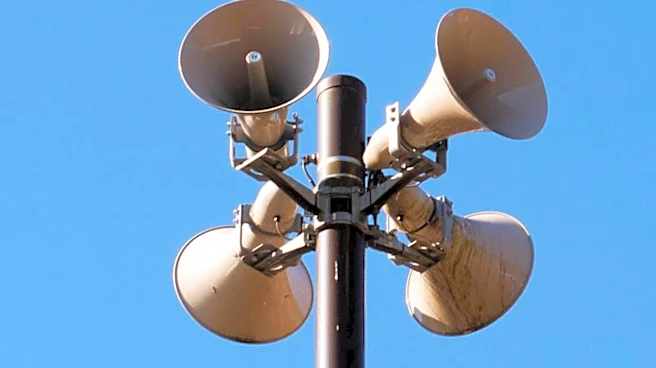
concerning establishments like Pier 13. The ordinance mandates permits for amplified music used for entertainment, performance, commercial recreation, health club use, or group fitness activities, prohibiting such sound before 12 p.m. and after 10 p.m. Amplified speech for event direction or safety can begin no earlier than 7 a.m. Single event permits will cost $75, monthly permits $250, and non-profit permits $25. Councilwoman Tiffanie Fisher highlighted that the uptown waterfront has the highest residential density in Hoboken, making it particularly susceptible to noise disturbances. While some council members, like Phil Cohen, expressed concerns about potential litigation and the fairness of targeting specific businesses, the ordinance ultimately passed with a 6-3 vote.
Why It's Important?
This new ordinance is important as it represents a direct effort by a municipal government to balance commercial activity with residential quality of life in densely populated waterfront areas. The implementation of these permits could set a precedent for other cities facing similar challenges, influencing how urban planning and noise regulations are approached in mixed-use zones. For businesses, particularly those relying on outdoor amplified sound for their operations, it introduces new compliance requirements and potential costs, which could impact their business models and profitability. Residents stand to gain from reduced noise levels, potentially improving their living environment. The debate surrounding the ordinance also highlights the ongoing tension between fostering a vibrant commercial scene and preserving the tranquility of residential neighborhoods, a common issue in growing urban centers across the U.S.
What's Next?
Following the ordinance's passage, waterfront businesses in Hoboken, particularly those utilizing outdoor amplified sound, will need to apply for the new permits and adhere to the stipulated sound restrictions. The city will likely begin enforcing these regulations, and businesses found in violation could face penalties. There is a possibility of legal challenges from affected businesses, as indicated by the attorney representing Pier 13, who argued that existing citywide noise ordinances and land use approvals already address noise concerns. The effectiveness of the new permit system in mitigating noise pollution and its impact on both residents and businesses will be closely monitored. Councilman Joe Quintero suggested that if successful, the ordinance could be expanded to other parts of Hoboken, indicating a potential broader shift in the city's approach to noise regulation.
Beyond the Headlines
The Hoboken ordinance touches upon broader themes of urban development, community well-being, and the evolving relationship between commercial enterprises and residential areas. It underscores the increasing demand for local governments to mediate conflicts arising from competing interests in shared public and semi-public spaces. The discussion around the ordinance also revealed underlying concerns about the character of Hoboken's waterfront, balancing its identity as a residential area with its appeal as a tourist destination. The pushback from businesses and the council's internal debate reflect the complexities of implementing regulations that are perceived as fair and effective, without stifling economic activity. This situation could prompt a re-evaluation of existing noise ordinances and land use policies in other U.S. cities, encouraging a more proactive approach to managing urban soundscapes and ensuring harmonious coexistence between diverse urban functions.