



What's Happening?
U.S. Senators Alex Padilla (D-Calif.), John Curtis (R-Utah), Jeff Merkley (D-Ore.), and Tim Sheehy (R-Mont.) have announced the introduction of the Wildland Firefighter Health and Safety Act. This bipartisan legislation aims to address long-standing gaps
in health and safety protections for federal wildland firefighters. Representative Maxine Dexter (D-Ore.-03) is leading companion legislation in the House. The bill seeks to establish a Wildland Firefighter Health Task Force and an Advisory Panel to coordinate exposure reduction efforts, pilot new respiratory technologies, and develop a comprehensive Wildland Firefighter Health Strategy every three years. Additionally, it mandates OSHA to issue an interim final standard for wildland firefighter health protection within five years of a pilot report, and requires paid duty time for decontamination after smoke or PFAS exposure. The legislation also calls for cleaning contaminated personal protective equipment (PPE), designated decontamination areas, and shower access at fire facilities. A dedicated Office of Workers’ Compensation Programs claims unit with specialized training on firefighting exposures will be created to expedite processing delays and improve coordination. Senator Padilla, co-chair of the Senate Wildfire Caucus, emphasized the responsibility to ensure firefighters have the necessary resources and support to perform their jobs safely, especially as California faces increasing wildfire threats.
Why It's Important?
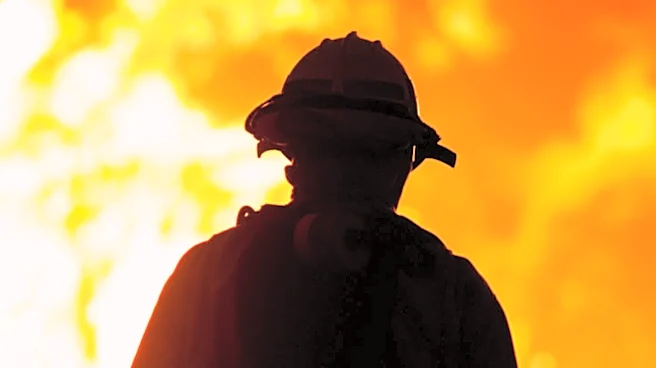
This legislation is crucial for the well-being of thousands of federal wildland firefighters who face significant health risks, including toxic smoke, extreme heat, injuries, and mental health challenges, while protecting communities and public lands. For nearly 30 years, data has highlighted these dangers, yet protections have lagged behind those for structural firefighters. The bill's provisions, such as establishing a health task force, mandating OSHA standards, and improving decontamination protocols, directly address these critical gaps. By investing in the long-term health of these essential workers, the act aims to reduce occupational illnesses like chronic lung disease and cancer, retain experienced firefighters, and strengthen workforce readiness. This initiative is supported by various organizations, including NFFE, Grassroots Wildland Firefighters, and the International Association of Firefighters, underscoring the widespread recognition of the urgent need for these protections. The bipartisan nature of the bill also signals a unified commitment across political lines to support those on the front lines of increasingly severe wildfire seasons, driven by climate change.
What's Next?
The Wildland Firefighter Health and Safety Act will now proceed through the legislative process in both the Senate and the House of Representatives. The involvement of companion legislation in the House, led by Representative Maxine Dexter, suggests a coordinated effort to advance the bill. Key next steps will include committee hearings, potential amendments, and votes in both chambers. If passed, the legislation will lead to the establishment of the Wildland Firefighter Health Task Force and Advisory Panel, which will begin coordinating efforts to reduce exposure and pilot new technologies. OSHA will be tasked with developing interim and final health protection standards, and federal agencies will need to implement the new requirements for decontamination, PPE cleaning, and facility access. The creation of a specialized Workers’ Compensation claims unit will also require administrative setup and training. The ongoing support from various firefighter and environmental organizations will likely play a role in advocating for the bill's passage and ensuring its effective implementation.
Beyond the Headlines
The Wildland Firefighter Health and Safety Act highlights a broader societal challenge: the increasing frequency and intensity of wildfires, often exacerbated by climate change, and the corresponding strain on emergency services. This legislation not only addresses immediate health and safety concerns but also implicitly acknowledges the evolving nature of firefighting as a profession, demanding more robust and specialized protections. The focus on long-term health impacts, such as chronic lung disease and cancer from smoke exposure, underscores a shift towards proactive and preventative healthcare for first responders. Furthermore, the bipartisan collaboration on this issue could serve as a model for addressing other pressing environmental and public safety challenges, demonstrating that common ground can be found when the well-being of essential workers and the protection of natural resources are at stake. This act could also set a precedent for other hazardous occupations, prompting a reevaluation of health and safety standards across various sectors.