

What's Happening?
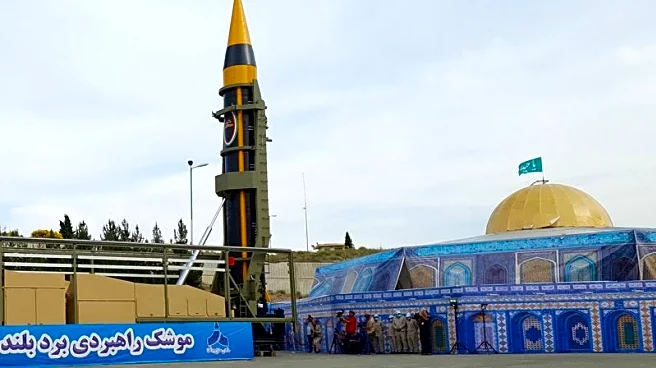
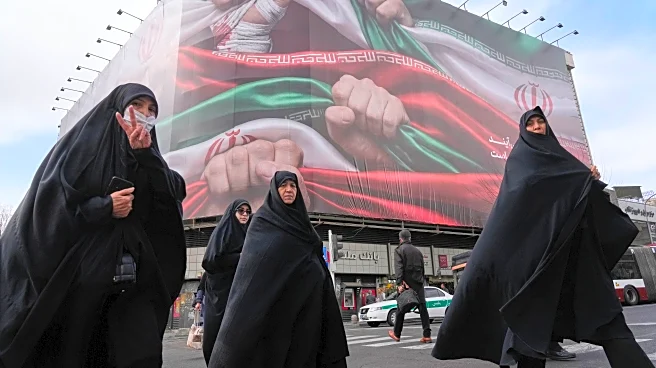
A new banner in Tehran's Palestine Square threatens Israel's northern city of Nahariya, signaling potential conflict with Hezbollah. The banner, featuring images of Hezbollah, warns Nahariya to 'be prepared' for the next war. This development comes amid
ongoing tensions between Hezbollah and Israel, with the Iranian regime using such displays for psychological warfare. Previously, Tehran has used similar tactics, including a mural depicting Israeli hostages. The banner reflects the heightened state of conflict and the use of propaganda in the region.
Why It's Important?
The banner in Tehran highlights the ongoing tensions between Iran, Hezbollah, and Israel. Such displays serve as a form of psychological warfare, aiming to intimidate and provoke. The situation underscores the fragile security environment in the region, with potential implications for broader Middle Eastern stability. The use of propaganda by the Iranian regime reflects its strategy to maintain influence and project power. This development also raises concerns about the potential for escalation and the impact on civilian populations in the affected areas.
What's Next?
The situation between Iran, Hezbollah, and Israel is likely to remain tense, with the potential for further provocations and conflict. The international community will be monitoring developments closely, as any escalation could have significant regional and global implications. Diplomatic efforts may be pursued to de-escalate tensions, but the use of propaganda and psychological warfare complicates the path to peace. The affected communities, particularly in northern Israel, will need to remain vigilant and prepared for potential threats.
Beyond the Headlines
The use of propaganda in the form of banners and murals highlights the role of psychological warfare in modern conflicts. This tactic reflects broader strategies employed by state and non-state actors to influence public perception and morale. The situation also raises ethical questions about the impact of such tactics on civilian populations and the potential for misinformation. The international community's response to these developments will be crucial in shaping the future of conflict resolution and peacebuilding efforts in the region.