



What's Happening?
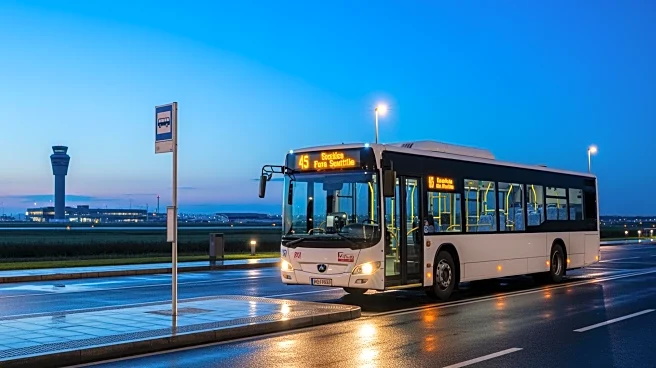
A new public transportation route, part of the 'Na'im Busofash' initiative, is set to begin operations this weekend, providing free service between Shoham and Tel Aviv with a stop at Terminal 1 of Ben Gurion Airport. This marks the first time a direct
public transport route to the airport will operate on Shabbat. Previously, travelers had to rely on taxis or private shuttles to reach the airport on Saturdays, as state-run public transportation does not operate on Shabbat due to a 1991 amendment to the Traffic Ordinance. The initiative, funded by 12 local authorities, aims to fill the gap left by the absence of government-operated services. The route will offer 17 trips each weekend, with buses departing every two to three hours.
Why It's Important?
The introduction of this service addresses a significant gap in public transportation on Shabbat, providing a cost-effective and accessible option for travelers to reach Ben Gurion Airport. This initiative highlights the role of local authorities in stepping in to meet public needs where government services are lacking. It also reflects a broader trend of municipal initiatives like 'Sababus' and 'Shabus' in other regions, which offer similar services without charging fares. The move could potentially increase accessibility and convenience for both residents and tourists, enhancing the overall travel experience in Israel.
What's Next?
As the 'Na'im Busofash' initiative expands, ridership is expected to grow by 14% in 2026, with plans to increase service frequencies and extend routes. The success of this initiative may encourage other municipalities to adopt similar models, potentially leading to a more comprehensive network of Shabbat public transportation services across the country. The ongoing collaboration between local authorities could also prompt discussions on the role of municipal versus state responsibilities in public transportation.
Beyond the Headlines
The launch of this service raises questions about the balance between religious observance and public service needs in Israel. The absence of state-run public transportation on Shabbat is rooted in religious tradition, yet the demand for such services indicates a shift towards more secular considerations in public policy. This development could spark broader debates on the intersection of religion and state in Israel, particularly in areas affecting daily life and public services.