







What's Happening?
Across 36 U.S. states, 126 programs are currently offering rebates and incentives for the installation of rain barrels and larger cisterns for rainwater harvesting. These programs, often managed by cities and stormwater utilities, aim to encourage residents
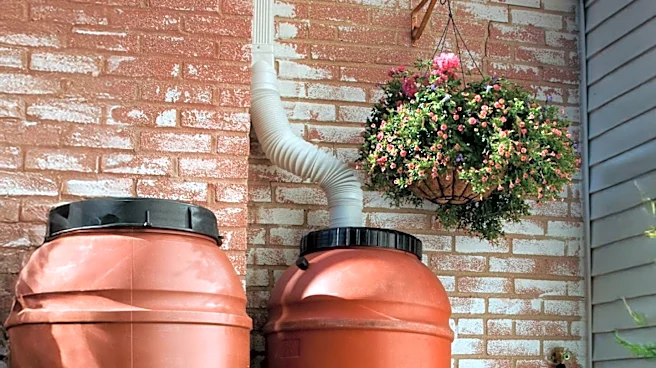
to collect and store rainwater. Rebates typically scale with the storage capacity of the system, with some programs covering a significant portion of material and labor costs. For instance, the City of Sunset Valley in Texas offers up to $10,000 per household, covering 75% of materials and labor, with the first $1,000 to $2,000 covered at 100%. Austin Water provides up to $5,000 based on storage capacity, while San Marcos offers $0.50 to $1.00 per gallon of storage, up to $5,000. The median maximum rebate per household across these programs is $200, though many offer substantially more. Some programs, like those in Lost Pines and Post Oak Savannah Groundwater Conservation Districts, offer $1 per gallon of storage, up to $5,000. These initiatives often require a photo of the installed barrel connected to a downspout to qualify for the rebate.
Why It's Important?
The widespread availability of rainwater harvesting rebates signifies a growing recognition of the environmental and economic benefits of water conservation in the U.S. By incentivizing the collection of rainwater, these programs help reduce demand on municipal water supplies, which can lead to lower water bills for residents and decreased operational costs for water utilities. Furthermore, rainwater harvesting plays a crucial role in managing stormwater runoff, mitigating flood risks, and preventing pollutants from entering natural waterways. This is particularly important in areas prone to drought or those experiencing rapid urbanization, where impervious surfaces contribute to increased runoff. The financial incentives make these systems more accessible to homeowners, promoting sustainable water practices at a household level and contributing to broader community resilience against water scarcity and environmental degradation. The programs also highlight a shift towards decentralized water management solutions, empowering individuals to contribute to water security.
What's Next?
The continued expansion and promotion of rainwater harvesting rebate programs are anticipated as water conservation becomes an increasingly critical issue across the U.S. As more communities face challenges related to water supply and stormwater management, similar initiatives are likely to emerge or grow in scope. Homeowners and businesses can expect to see ongoing opportunities to receive financial assistance for installing rain barrels and cisterns. There may also be an increase in educational campaigns to inform the public about the benefits and proper installation of these systems. Furthermore, as technology advances, there could be a push for more sophisticated rainwater harvesting solutions, potentially leading to higher rebate amounts for larger or more integrated systems. The success of these programs could also influence policy decisions at state and federal levels, potentially leading to broader incentives or regulations supporting water reuse and conservation.
Beyond the Headlines
Beyond the immediate financial benefits, the proliferation of rainwater harvesting programs reflects a deeper societal shift towards environmental stewardship and resource independence. By encouraging individuals to collect and utilize rainwater, these initiatives foster a greater connection to natural cycles and promote a sense of responsibility for local ecosystems. The act of harvesting rainwater, even on a small scale, can empower communities to become more self-sufficient in their water needs, reducing reliance on centralized infrastructure and potentially buffering against future water crises. Ethically, it aligns with principles of sustainability and responsible resource management, encouraging a mindset of conservation rather than consumption. Culturally, it could lead to a resurgence of traditional water management practices adapted for modern urban and suburban environments, integrating ecological principles into daily life. This movement also highlights the potential for distributed, small-scale solutions to collectively address large-scale environmental challenges.