





What's Happening?
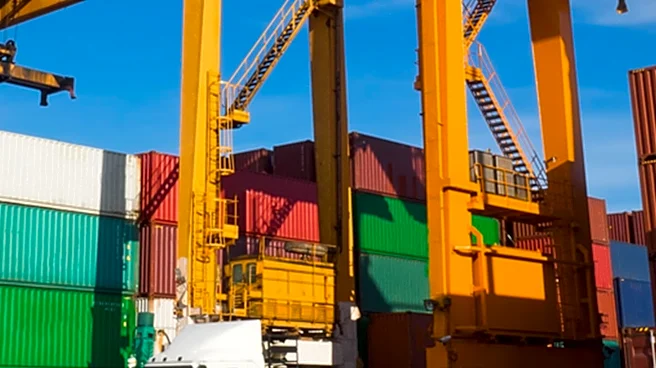
The United Arab Emirates (UAE) has significantly invested in the development of Berbera Port in Somaliland, transforming it into a strategic hub that links trade, security, and regional geopolitics in the Horn of Africa. The port, historically significant due
to its location along a major maritime corridor, has been modernized with the help of DP World, a Dubai government-owned logistics company. This investment is part of a broader UAE strategy to expand its economic and strategic presence across Africa, involving ports, agriculture, mining, and security relationships. The development of Berbera Port is seen as a key component of this strategy, offering commercial infrastructure and geopolitical leverage. For Somaliland, the port is not only an economic asset but also a potential tool for gaining international recognition, as it operates with its own government since declaring independence in 1991.
Why It's Important?
The UAE's investment in Berbera Port is significant as it enhances the region's economic potential and strategic importance. For Somaliland, the port could become a vital economic gateway, particularly for landlocked Ethiopia, which relies heavily on neighboring Djibouti for maritime access. This development could shift regional trade dynamics, offering Somaliland economic leverage and potentially strengthening its case for international recognition. For the UAE, Berbera Port is a strategic asset that enhances its influence in Africa, aligning with its broader goal of establishing a post-oil economy with diversified interests. The port's development also reflects the UAE's dual-track approach, combining economic investments with security arrangements, which could impact regional stability and geopolitical alignments.
What's Next?
The future of Berbera Port will depend on several factors, including Ethiopia's willingness to redirect trade through Somaliland and the resolution of Somaliland's political status. If Ethiopia increases its use of Berbera, the port could become a major logistics hub, boosting Somaliland's economy and international profile. However, the port's success is also tied to the broader geopolitical landscape, including Somaliland's ongoing quest for recognition and the UAE's strategic interests in the region. The UAE's involvement in Berbera could influence regional security dynamics, particularly in relation to maritime security and the Horn of Africa's political disputes. The development of Berbera Port will likely continue to be a focal point for regional and international stakeholders, with potential implications for trade, security, and diplomatic relations.
Beyond the Headlines
The UAE's investment in Berbera Port highlights the complex interplay between economic development and geopolitical strategy. While the port offers economic opportunities for Somaliland, it also raises questions about sovereignty and dependency. The UAE's approach, which combines commercial investments with security arrangements, reflects a broader trend of middle powers exerting influence through strategic infrastructure projects. This model challenges traditional norms of engagement and raises concerns about the balance of power in Africa. For Somaliland, the challenge is to leverage the UAE's investment to enhance its economic sovereignty while navigating the political complexities of the region. The development of Berbera Port could serve as a case study for other African nations seeking to balance foreign investment with national interests.