






What's Happening?
East Point Energy has canceled its proposed Hillman Energy Center, a large battery energy storage system in Tewksbury, Massachusetts. The decision came after the company was informed it would face an unexpected $65 million charge to connect the project
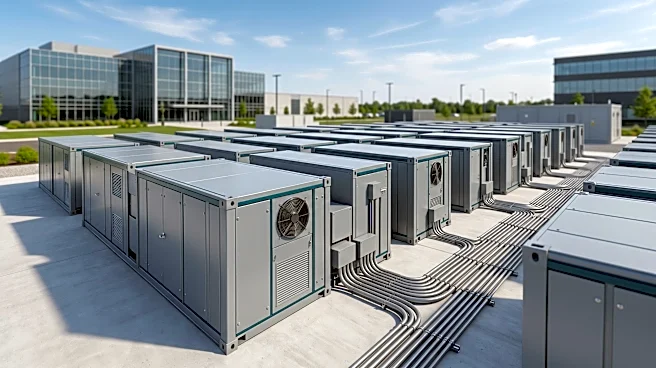
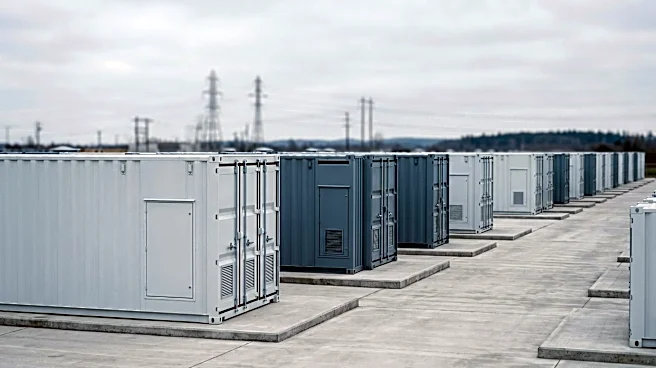
to the electric grid, more than triple its initial estimate. The project, which would have housed 134 lithium-ion batteries with a collective capacity of 125 megawatts, was intended to store excess electricity and release it during peak demand, supporting Massachusetts' clean energy goals. State officials and climate advocates view this cancellation as a significant setback, highlighting the exorbitant costs associated with connecting new clean energy projects to New England's aging and congested power grid. While local residents who opposed the project due to safety concerns celebrated the decision, state Energy and Environmental Affairs Secretary Rebecca Tepper had previously warned that high interconnection costs could deter investment in the region.
Why It's Important?
The cancellation of the Tewksbury battery project underscores a critical challenge facing the U.S. clean energy transition: the prohibitive cost of upgrading and connecting to an outdated grid infrastructure. This incident in Massachusetts could have a chilling effect on similar projects across the New England region and potentially nationwide, hindering efforts to integrate renewable energy sources and enhance grid reliability. High interconnection costs directly impact the economic viability of clean energy developments, making it difficult for companies to justify investments. This situation also highlights the tension between local community concerns regarding safety and the broader state and national goals for clean energy and grid modernization. Without effective strategies to fund and streamline grid upgrades, the U.S. risks falling short of its clean energy targets and increasing its vulnerability to energy price fluctuations and supply disruptions.
What's Next?
The cancellation of the Tewksbury project will likely intensify discussions among Massachusetts state officials, ISO New England, and clean energy advocates regarding alternative funding mechanisms and policy changes to address high interconnection costs. There may be a push for regulatory reforms that reallocate the financial burden of grid upgrades or introduce new incentives to offset these costs for developers. The incident could also prompt a re-evaluation of the state's ambitious goal of getting 5,000 megawatts of new energy storage online or in development by 2035, potentially leading to adjustments in strategy or timeline. Furthermore, other clean energy developers in the region will be closely monitoring these developments, and similar projects may face increased scrutiny or delays until a more sustainable solution for grid interconnection is established. The focus will likely shift towards finding equitable ways to fund necessary grid modernization without disproportionately burdening individual projects or ratepayers.
Beyond the Headlines
The Tewksbury project's cancellation reveals a deeper systemic issue within the U.S. energy landscape: the mismatch between rapid advancements in clean energy technology and the slow pace of grid infrastructure modernization. While states like Massachusetts are setting ambitious clean energy targets, the existing grid, often decades old, was not designed to accommodate the intermittent nature of renewables or the distributed generation model. This creates a bottleneck, where even economically viable projects become unfeasible due to the 'last mile' problem of connecting to the grid. The incident also highlights the complex interplay between state-level energy policy, regional grid operators, and local community concerns. Addressing this will require not only financial solutions but also a more integrated planning approach that considers the entire energy ecosystem, from generation to transmission and distribution, ensuring that grid upgrades are prioritized and funded in a way that supports, rather than hinders, the clean energy transition.