





What's Happening?
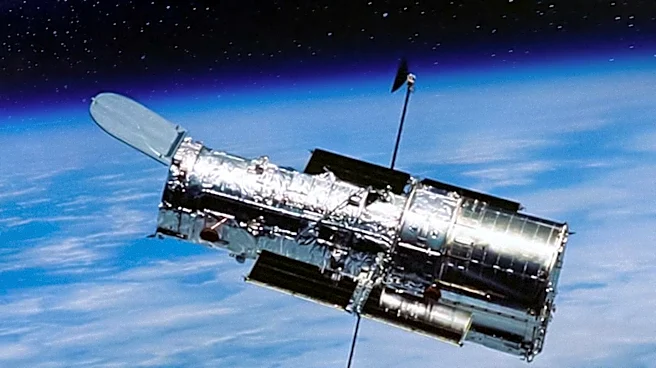
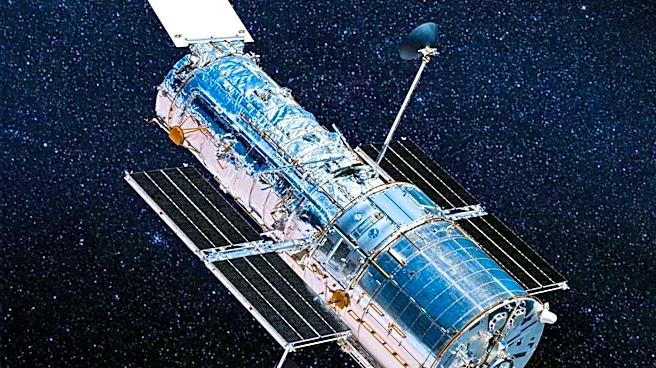
NASA has issued a Request for Information (RFI) on October 29 to solicit commercial concepts for the future of the Hubble Space Telescope. The agency is exploring options to either boost Hubble to a higher orbit, service it to extend its operational life,
or guide it into a controlled reentry. The Hubble Space Telescope, launched in April 1990, currently operates at an altitude of approximately 300 miles, but its orbit is decaying at a rate of about 9 miles per year. The RFI asks companies to detail their proposed launch timelines, the altitude they could add, and the minimum altitude required to reach a 600-kilometer target. Any proposed mission must not harm the telescope and must be completed by 2032. This RFI marks a shift from NASA's previous stance two years ago, when it stated it would not pursue a commercial reboost for the telescope.
Why It's Important?
The Hubble Space Telescope has been a cornerstone of astronomical discovery for over three decades, providing groundbreaking insights into the universe, including confirming its age, the presence of supermassive black holes, and the accelerating expansion of the cosmos. Its continued operation is vital for ongoing scientific research and understanding of space. A successful commercial mission to extend Hubble's life would allow for further scientific breakthroughs and maximize the return on investment for this critical national asset. Conversely, a controlled reentry mission would prevent the uncontrolled fall of a large spacecraft, mitigating potential risks to populated areas. The RFI also highlights the growing capabilities of the commercial space industry, demonstrating NASA's increasing reliance on private sector innovation for complex space operations.
What's Next?
Responses to NASA's Request for Information are due by November 30. NASA will use these responses to evaluate the feasibility and potential approaches for a future mission. While the RFI is not a contract, it is the initial step towards shaping a formal Request for Proposals. The agency has not yet set a timeline or budget for such a mission. Key considerations for NASA will include the technological readiness of proposed solutions, risk mitigation strategies, and the cost-effectiveness of each option. The outcome of this RFI could lead to a significant commercial partnership to preserve or safely retire one of humanity's most iconic scientific instruments.
Beyond the Headlines
This initiative underscores a broader trend in space exploration where government agencies like NASA are increasingly leveraging the rapid advancements and cost efficiencies offered by the private space sector. The potential for commercial entities to undertake complex in-space servicing missions, such as boosting or deorbiting a large observatory, signifies a maturation of the commercial space industry. It also raises questions about the long-term sustainability of aging space infrastructure and the responsibility for managing orbital debris. The success of such a mission could set a precedent for future collaborations, potentially extending the operational lives of other valuable space assets and influencing future mission planning and design to incorporate servicing capabilities from the outset.