






What's Happening?
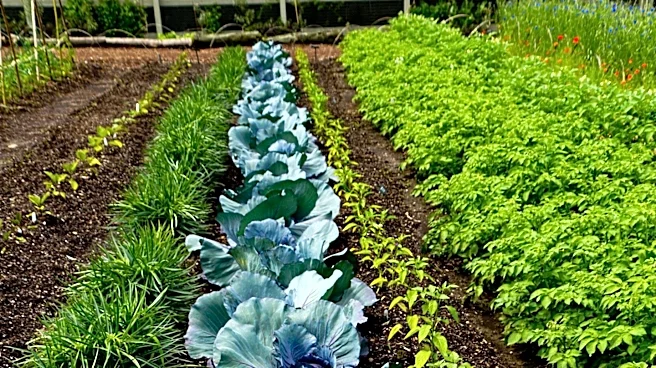
Rid-All Green Partnership, an urban farm in Cuyahoga County, Cleveland, is actively teaching community members how to grow their own food and establish agricultural businesses. The organization, founded in 2011, has expanded to 18 acres, with approximately
half dedicated to farming. Beyond cultivation, Rid-All Green Partnership offers programs like the Urban Agriculture Initiative, which provides agricultural business classes. Janiene Taylor, a part-time farmer who learned from this initiative, now teaches plant care through events such as the Bloom Bar. The farm emphasizes that individuals do not need extensive experience to start gardening, only basic knowledge, and encourages growing food in various spaces, from dedicated farms to apartments with balconies. The initiative aims to empower residents to provide food for their families and communities.
Why It's Important?
This initiative is important for fostering local food security and promoting self-sufficiency within urban communities. By teaching residents how to cultivate their own produce, Rid-All Green Partnership addresses potential food deserts and reduces reliance on external food supply chains, which can be vulnerable to disruptions. The focus on agricultural business skills also provides economic opportunities, enabling individuals to create their own ventures and contribute to the local economy. This model can lead to healthier eating habits by increasing access to fresh, locally grown food and can strengthen community bonds through shared knowledge and activities. Furthermore, reclaiming urban spaces for farming contributes to environmental sustainability by utilizing land efficiently and potentially reducing carbon footprints associated with food transportation.
What's Next?
Rid-All Green Partnership is expected to continue its educational programs and community outreach, potentially expanding its curriculum to reach more residents. Individuals like Janiene Taylor, who aspire to establish their own farmlands, will likely continue to share their knowledge, further disseminating sustainable farming practices within the community. The organization's existing infrastructure, including a tree nursery, compost facility, commercial fish farm, and a restaurant that prepares food for the community, suggests a continued integrated approach to urban agriculture. Future developments may include more partnerships with local schools or community centers to broaden the impact of their educational initiatives and potentially inspire similar urban farming models in other cities.
Beyond the Headlines
The work of Rid-All Green Partnership highlights a broader societal shift towards localized food systems and community resilience. It addresses not only practical aspects of food production but also the social and cultural dimensions of food. By empowering individuals to grow their own food, the initiative fosters a deeper connection to nature and an understanding of food origins, which can combat consumer detachment from agricultural processes. The emphasis on collective ownership and community benefit also touches upon themes of social justice and equitable access to resources. This model could serve as a blueprint for urban revitalization, transforming underutilized spaces into productive assets that enhance both environmental quality and community well-being, ultimately contributing to a more sustainable and self-reliant urban future.