
What's Happening?
A new report by The New York Times has revealed an additional reason behind the White House's decision to temporarily ban The Associated Press (AP) from covering certain events during the early weeks of
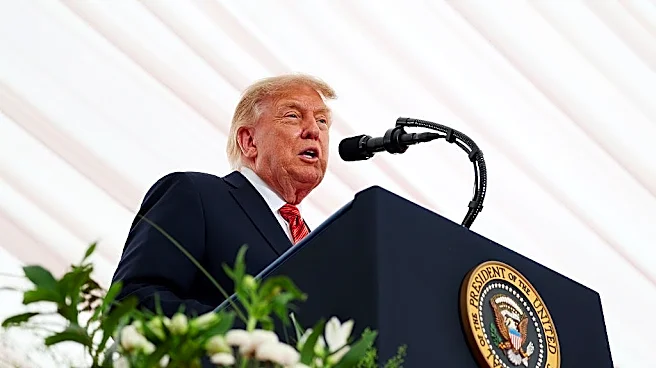
President Trump's second term. While the White House initially attributed the restrictions to the AP's refusal to adopt President Trump's preferred name for the Gulf of Mexico, 'the Gulf of America,' the Times report indicates another dispute was also at play. According to Maggie Haberman and Jim Rutenberg, the ban also stemmed from the AP's decision not to grant the 'Trump team rights to its photo of Mr. Trump, bloodied with a raised fist' following an attempt on his life at a campaign rally in Butler, Pennsylvania, in July 2024. White House aides reportedly linked the AP ban to the denial of rights to this photo during a private lunch with President Trump and network anchors in 2025.
Why It's Important?
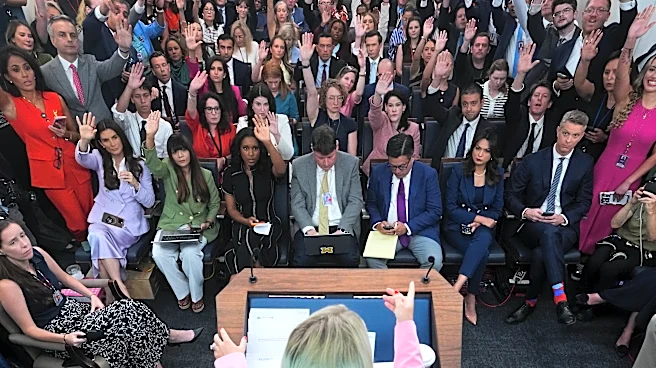
This revelation is significant as it sheds new light on the relationship between the Trump administration and the press, particularly a major news wire service like the Associated Press. The initial explanation for the ban, concerning the renaming of a body of water, was already seen as an unusual and potentially politically motivated restriction on press access. The added detail about the photo rights suggests a deeper conflict over image control and the use of journalistic content for political campaigns. This incident underscores the challenges faced by news organizations in maintaining editorial independence when dealing with administrations that seek to control narratives and imagery. It also highlights the potential for government actions to impact the operational freedom of the press, raising concerns about First Amendment rights and the role of a free press in a democratic society.
What's Next?
The new information may lead to renewed discussions and scrutiny regarding the Trump administration's past interactions with the press and its approach to media relations. While a federal judge previously ruled the ban a violation of the First Amendment, this additional context could inform future analyses of press freedom issues. News organizations may further solidify their policies regarding the use of their copyrighted content by political campaigns, especially in situations where such use could be perceived as an endorsement or a compromise of journalistic integrity. The incident could also serve as a case study for media ethics and government transparency, influencing how future administrations and news outlets navigate similar disputes over access and content usage.
Beyond the Headlines
Beyond the immediate dispute, this incident touches upon the broader struggle for control over public perception and political messaging. The desire of the 'Trump team' to control the rights to a specific photo, particularly one depicting President Trump in a vulnerable yet defiant posture, speaks to the power of imagery in political campaigns and the strategic importance of visual narratives. The AP's refusal to grant these rights, despite potential repercussions, highlights the ethical imperative of news organizations to maintain their independence and prevent their content from being co-opted for partisan purposes. This situation also reflects a growing trend of political figures attempting to exert greater control over how they are portrayed in the media, challenging traditional journalistic norms and raising fundamental questions about the boundaries between news reporting and political propaganda.