








What's Happening?
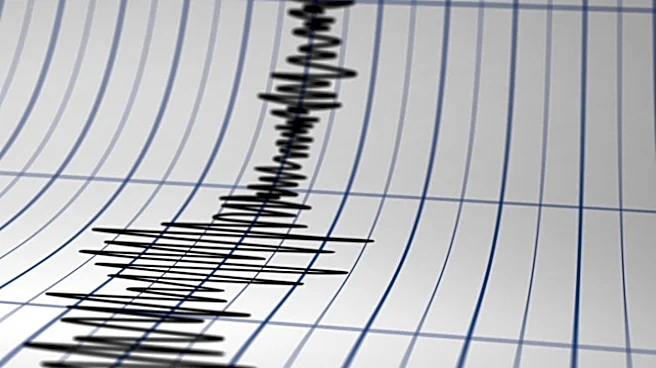
A minor earthquake with a magnitude of 2.4 was reported by the U.S. Geological Survey (USGS) in southern Illinois on Monday morning. The earthquake occurred approximately three miles southwest of Valier, a town in Franklin County. Valier is situated about
95 miles southeast of St. Louis and 160 miles south of Springfield. There were no immediate reports of damage or injuries associated with the seismic event. This earthquake took place within the 'Ozark Dome Region,' an area known for moderately frequent seismic activity, which borders the more prominent New Madrid seismic zone. Illinois has experienced several minor earthquakes this year, including a 2.9-magnitude quake near Chicago in July and the largest, a 3.8-magnitude event, near Springfield.
Why It's Important?
While this particular earthquake was minor and caused no reported damage, its occurrence highlights the ongoing seismic activity in the central and eastern United States, particularly within the Ozark Dome Region and its proximity to the New Madrid seismic zone. Understanding these minor events is crucial for seismologists to monitor fault lines and assess long-term seismic risk in areas that are not typically associated with high earthquake frequency, unlike California or Alaska. For residents in Illinois, Indiana, Kentucky, and Minnesota, where the Ozark Dome Region extends, these events serve as a reminder of the potential for seismic activity. Continuous monitoring by agencies like the USGS helps inform building codes and emergency preparedness plans, ensuring that communities are better equipped to handle larger, potentially damaging earthquakes should they occur.
What's Next?
The USGS will continue to monitor seismic activity in the Ozark Dome Region and other active zones across the U.S. Data from minor earthquakes like this one contribute to a broader understanding of regional fault systems and their behavior. While no immediate actions are typically required for such small events, the cumulative data helps refine seismic hazard maps and risk assessments. Local authorities and emergency management agencies in southern Illinois and surrounding states will likely continue to review and update their preparedness protocols based on ongoing seismic monitoring. Public awareness campaigns about earthquake safety, even for minor tremors, may also be reinforced to ensure residents know how to react during a seismic event.
Beyond the Headlines
The occurrence of earthquakes in regions like southern Illinois, far from major plate boundaries, points to the complex geological forces at play within continental interiors. These 'intraplate' earthquakes are often less understood than those at plate boundaries, making continuous monitoring and research vital. The Ozark Dome Region's connection to the New Madrid seismic zone is particularly significant, as the New Madrid zone has historically produced some of the largest earthquakes in U.S. history. Studying minor tremors in adjacent areas can provide clues about stress accumulation and potential rupture points in the broader region. This ongoing seismic activity underscores the need for a national, comprehensive approach to earthquake preparedness, extending beyond the traditionally recognized high-risk areas.