




What's Happening?
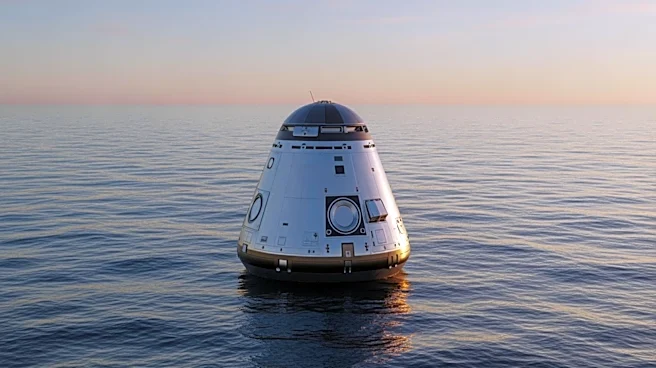
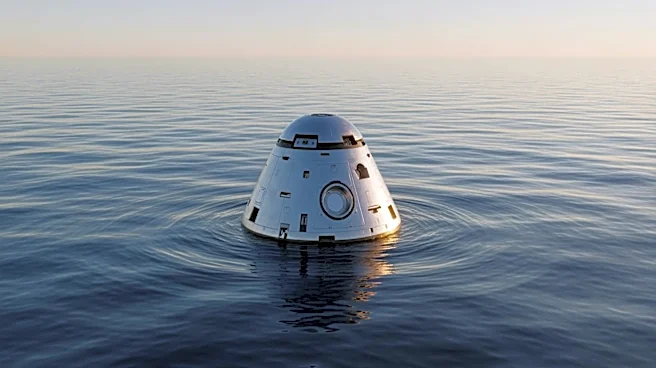
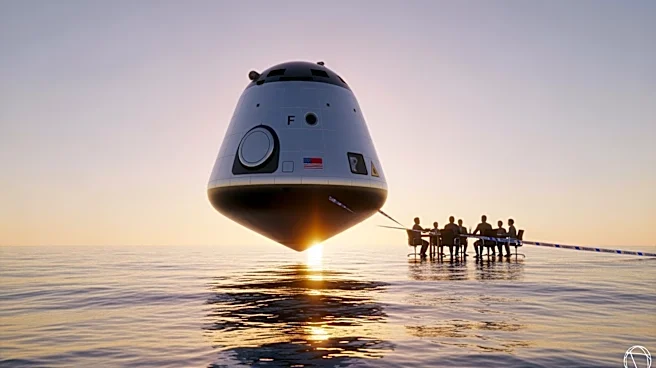
NASA's Artemis II mission successfully concluded with the Orion spacecraft splashing down in the Pacific Ocean on April 10, 2026. The mission, lasting nearly 10 days, set a new record for the farthest crewed spaceflight, surpassing the Apollo 13 mission.
The Artemis II crew achieved several milestones, including capturing views of the Moon's far side. This mission is part of NASA's broader Artemis program, which aims to send astronauts on increasingly challenging missions to explore more of the Moon for scientific discovery and economic benefits, and to lay the groundwork for the first crewed missions to Mars.
Why It's Important?
The successful completion of the Artemis II mission marks a significant step in NASA's efforts to advance human space exploration. By surpassing previous records, the mission demonstrates the capabilities of the Orion spacecraft and the potential for future deep-space missions. This achievement is crucial for the Artemis program's goal of establishing a sustainable human presence on the Moon and eventually sending astronauts to Mars. The mission's success also reinforces the United States' leadership in space exploration, potentially influencing international collaborations and investments in space technology.
What's Next?
Following the Artemis II mission, NASA plans to continue with the Artemis program, which includes sending astronauts on more complex missions to the Moon. These missions will focus on scientific research, resource utilization, and technology development necessary for future Mars exploration. The next steps involve preparing for Artemis III, which aims to land astronauts on the lunar surface. NASA will also work on developing infrastructure and partnerships to support long-term lunar exploration and eventual Mars missions.