
What's Happening?
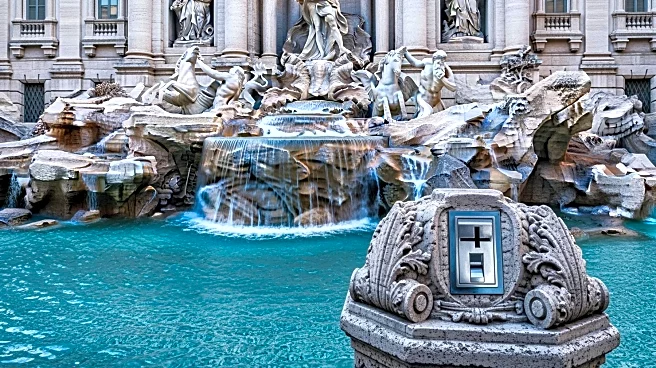
Rome has introduced a new fee of $2.35 for tourists wishing to access the Trevi Fountain, starting Monday. This initiative is part of the city's broader strategy to manage tourist flows, enhance visitor
experience, and generate additional revenue for maintaining Rome's cultural heritage. The fee follows a successful trial that involved controlling the number of visitors through designated pathways. The city expects to generate approximately $7.6 million annually from this fee. While tourists are required to pay, Rome residents are exempt, and the revenue will also support free access to more city-run museums for locals. The measure is similar to other tourist management strategies in Italy, such as the ticketing system at the Pantheon and Venice's day-tripper tax.
Why It's Important?
The introduction of the Trevi Fountain fee is significant as it addresses the challenges of overtourism, which can lead to overcrowding and degradation of cultural sites. By controlling the number of visitors, Rome aims to preserve the integrity of its historical landmarks while improving the overall tourist experience. The revenue generated will help fund the maintenance of these sites, ensuring their preservation for future generations. This approach reflects a growing trend among popular tourist destinations to balance tourism with sustainability, potentially influencing other cities facing similar challenges.
What's Next?
The success of the Trevi Fountain fee could lead to the implementation of similar measures at other popular tourist sites in Rome and beyond. As cities worldwide grapple with the impacts of overtourism, strategies like this may become more common. Stakeholders, including local businesses and tourism operators, will likely monitor the impact of the fee on visitor numbers and local economies. Additionally, the response from tourists and the effectiveness of the fee in managing crowds will be crucial in determining the future of such initiatives.