








What's Happening?
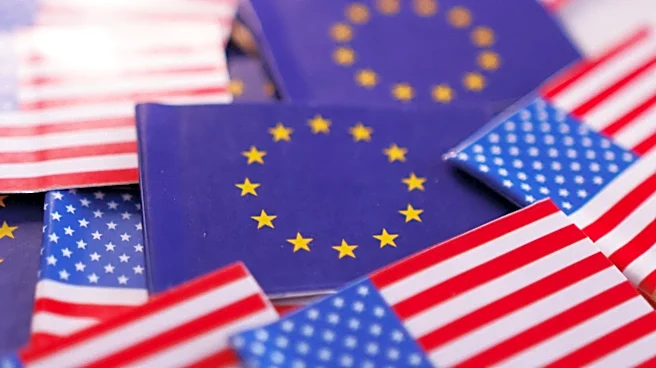
Canada and the European Union have agreed to pursue an "ever closer association" but have removed the concept of 'associate EU membership' from a joint declaration ahead of a Montreal summit. This decision, reported by Reuters, comes after the idea of associate membership proved
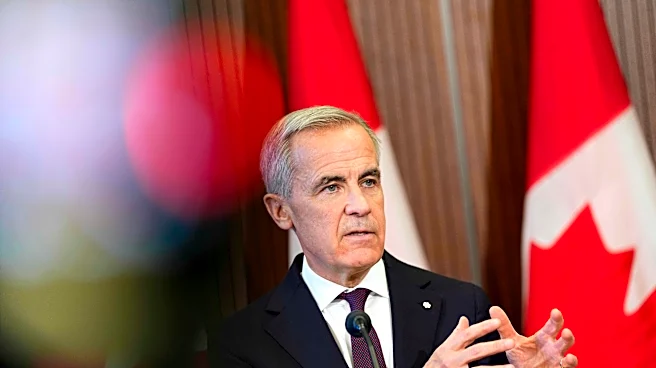
contentious among EU member states, with Germany leading opposition due to the lack of legal definition and fleshed-out details for such a status. The initial proposal for Canada to become an associate member was made by European Commission President Ursula von der Leyen six weeks prior. The joint declaration, expected to be made public on Friday, indicates that discussions to define the Canada-EU relationship will continue for another year. Canadian Prime Minister Mark Carney stated that the summit marks the beginning of formal negotiations that will extend over the next year, emphasizing that the specific nomenclature is less important than the tangible benefits for Canadians. This move is part of Carney's broader strategy to reduce Canada's economic and security reliance on the U.S. following tariffs imposed by President Trump.
Why It's Important?
This development is significant for U.S. foreign relations and trade policy. President Trump had previously labeled the EU's associate membership proposal as 'laughable' and warned of potential trade repercussions with Europe if he perceived the move as a 'hostile act.' By dropping the 'associate member' terminology, Canada and the EU appear to be navigating a delicate balance to strengthen their ties without overtly provoking the U.S. This strategic avoidance of a direct confrontation with President Trump is crucial as trade talks between Canada and the U.S. are ongoing. Canada's efforts to diversify its economic and security partnerships away from the U.S. are a direct response to past U.S. trade actions, highlighting a broader trend of nations re-evaluating their dependencies. The U.S. stands to lose influence if Canada successfully deepens its European ties, potentially impacting future trade negotiations and geopolitical alignments. Conversely, avoiding a direct challenge to President Trump's stance helps maintain a more stable, albeit complex, trilateral relationship.
What's Next?
The Montreal summit, hosted by Canadian Prime Minister Mark Carney, will proceed with discussions focused on strengthening Canada-EU ties under the new framework of "ever closer association." Formal negotiations are expected to continue for another year to define the specifics of this relationship. The joint declaration will include initiatives such as improving international connectivity through new subsea cable infrastructure between Europe, Canada, and Asia, and a joint feasibility study on Canadian liquefied natural gas exports to Europe. Additionally, there are plans to facilitate opportunities for young Canadians and Europeans to work across the Atlantic. However, some experts, like Julian Karaguesian, a former adviser at Canada’s Finance Ministry, view the summit as largely symbolic, questioning the clarity of Canada's efforts to deepen ties with the EU. The U.S. will likely continue to monitor these developments closely, particularly as Canada's strategy aims to reduce its reliance on the U.S. while trade talks between the two North American nations persist.
Beyond the Headlines
The decision to drop the 'associate member' designation reflects a deeper geopolitical maneuvering aimed at balancing strategic autonomy with the avoidance of direct conflict with a major trading partner. While the immediate goal is to de-escalate tensions with President Trump, the underlying motivation for Canada to diversify its relationships remains. This situation underscores the challenges smaller economies face in navigating the complex landscape of international trade and alliances, especially when dealing with powerful neighbors. The emphasis on 'ever closer association' without a formal, legally defined status suggests a pragmatic approach to international relations, prioritizing functional cooperation over potentially provocative labels. This could set a precedent for other nations seeking to expand their global partnerships while managing existing, sometimes strained, relationships with dominant powers. The long-term implications could include a more multipolar global economic structure, where countries like Canada actively seek to reduce their vulnerability to unilateral actions from any single nation.