



What's Happening?
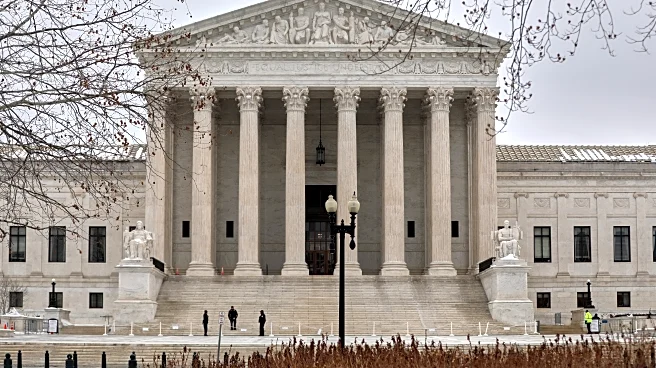
The Supreme Court has issued a significant ruling that curtails President Trump's ability to impose global tariffs without congressional approval. In a 6-3 decision, the justices determined that Trump's use of emergency powers to implement sweeping tariffs was
illegal, reaffirming the authority of Congress in such matters. This decision comes as a rebuke to President Trump's approach of bypassing Congress to achieve his policy goals. The ruling highlights the ongoing tension between the executive branch and Congress, particularly as the midterm elections approach. The decision also underscores the role of the Supreme Court in maintaining the balance of power among the branches of government.
Why It's Important?
This ruling is pivotal as it reasserts the constitutional role of Congress in regulating trade and tariffs, a power that has been increasingly challenged by the executive branch. The decision could have significant implications for U.S. economic policy and international trade relations, as it limits the president's unilateral ability to impose tariffs. This may lead to increased economic stability and predictability for businesses that rely on clear trade policies. Additionally, the ruling could influence the political landscape, as it may embolden Congress to reassert its authority in other areas where the executive branch has overreached. The decision also highlights the importance of checks and balances in preventing the concentration of power in the hands of a single individual.
What's Next?
Following the Supreme Court's decision, President Trump announced a new 10% global tariff with a 150-day expiration, citing a different legal authority. This move suggests that the administration may continue to seek alternative avenues to impose tariffs, potentially leading to further legal challenges and political debates. The ruling may also prompt Congress to take legislative action to clarify and strengthen its role in trade policy. As the midterm elections approach, the decision could become a focal point in political campaigns, with candidates debating the appropriate balance of power between the executive and legislative branches.
Beyond the Headlines
The Supreme Court's decision may have broader implications for the interpretation of emergency powers and the limits of executive authority. Justice Neil Gorsuch, in his concurring opinion, emphasized the dangers of allowing too much power to be concentrated in the hands of one individual, warning against the erosion of the system of checks and balances. This ruling could set a precedent for future cases involving executive overreach, potentially influencing how emergency powers are used in other contexts. The decision also reflects ongoing debates about the role of the judiciary in safeguarding democratic principles and preventing the abuse of power.