
What's Happening?
President Trump's 'America First' policy, characterized by punitive trade tariffs and a focus on U.S. economic dominance, is facing challenges as international allies seek to diversify their trade relationships.
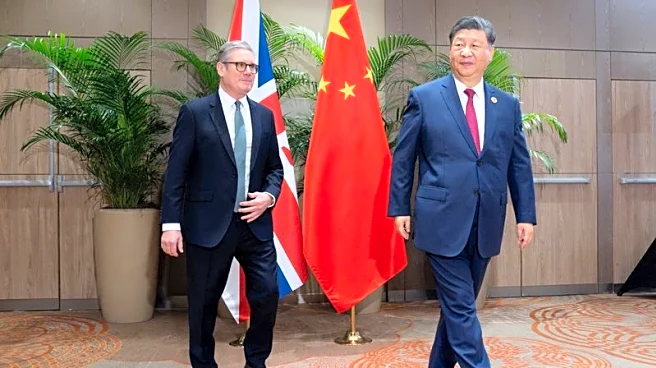
Recent developments have seen countries like China, Canada, and the European Union forming new trade agreements, effectively sidelining the U.S. These moves are partly driven by the unpredictability of U.S. foreign policy and the desire of other nations to protect their economic interests. The shift in global trade dynamics reflects a recalibration of alliances, with countries pursuing specific interests rather than comprehensive alignments.
Why It's Important?
The shift in global trade relationships highlights the potential drawbacks of the 'America First' policy, as traditional allies seek to reduce their reliance on the U.S. and explore new partnerships. This trend could lead to a realignment of global economic power and influence, with emerging markets potentially benefiting from diversified trade policies. The U.S. may face increased isolation in international trade discussions, impacting its ability to shape global economic policies. The situation underscores the importance of maintaining stable and cooperative international relations to ensure economic growth and stability.
What's Next?
As countries continue to forge new trade agreements, the U.S. may need to reassess its foreign policy approach to maintain its influence in global trade. Diplomatic efforts and negotiations could play a crucial role in rebuilding trust and fostering collaboration with international partners. The evolving trade landscape may also prompt discussions on the future of multilateral trade agreements and the role of the U.S. in shaping global economic policies.