





What's Happening?
The International Federation of Red Cross and Red Crescent Societies (IFRC) has called on global leaders attending the United Nations climate conference in Turkiye to significantly boost investment in protecting vulnerable populations from the humanitarian
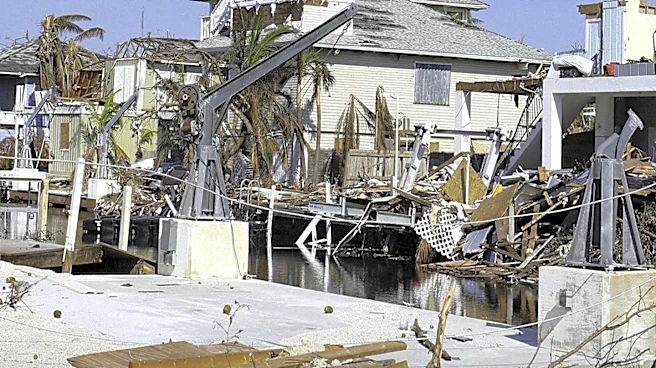
impacts of climate change. The IFRC emphasized that climate change is intensifying extreme weather events such as heatwaves, floods, droughts, and storms, which pose severe threats to lives, livelihoods, and public health. With an exceptionally strong El Nino expected to exacerbate extreme weather conditions this year, the organization stressed the critical need for increased investment in preparedness and adaptation measures. The IFRC cited the recent devastating floods in Nepal as an example of both the humanitarian risks and the life-saving potential of preparedness, highlighting how disaster preparedness training provided by the Nepal Red Cross enabled a school principal to evacuate hundreds of students to safety before a flash flood struck.
Why It's Important?
This call to action from the IFRC underscores the growing global recognition of climate change as a direct and immediate humanitarian crisis, not just an environmental one. For the U.S., this perspective is crucial as it faces its own challenges with extreme weather events, from hurricanes and wildfires to droughts and heatwaves, which disproportionately affect vulnerable communities. Increased international investment in climate adaptation, as advocated by the IFRC, could set precedents and foster best practices that the U.S. could adopt or contribute to, enhancing its own national resilience strategies. Furthermore, the emphasis on community preparedness and anticipatory action aligns with efforts to reduce the economic and social costs of disaster response, which are substantial for the U.S. The IFRC's message highlights that proactive investment in preparedness is not only a moral imperative but also a fiscally responsible approach, potentially saving lives and reducing the financial burden of post-disaster recovery.
What's Next?
The IFRC urges governments to prioritize health within their national climate adaptation plans and to fulfill previous commitments, specifically to triple adaptation finance by 2035. They also advocate for greater investment in community preparedness, anticipatory actions, and pre-arranged financing mechanisms. These recommendations will likely be key discussion points at the upcoming UN climate conference in Turkiye, where global leaders will convene to address climate change strategies. The IFRC's Secretary-General, Jagan Chapagain, emphasized that while the Nepal experience demonstrates the effectiveness of preparedness, many communities still lack the necessary support to prepare for increasingly severe climate risks. The outcome of these discussions and the subsequent actions taken by governments will determine the extent to which vulnerable populations are protected from future climate-related humanitarian crises.
Beyond the Headlines
The IFRC's advocacy extends beyond immediate disaster response, touching upon deeper ethical and policy considerations. By highlighting the disproportionate impact of climate change on vulnerable populations, the organization implicitly calls for climate justice, urging wealthier nations and those historically more responsible for emissions to support those most affected. The emphasis on integrating health into national climate adaptation plans signifies a shift towards a more holistic understanding of climate impacts, recognizing that environmental changes directly translate into public health crises. This approach could lead to long-term shifts in how governments allocate resources, potentially fostering greater collaboration between environmental agencies, health departments, and humanitarian organizations. The IFRC's stance also reinforces the idea that investing in preparedness is a strategic economic decision, challenging the notion that such investments are merely discretionary spending and instead framing them as essential for sustainable development and stability.