




What's Happening?
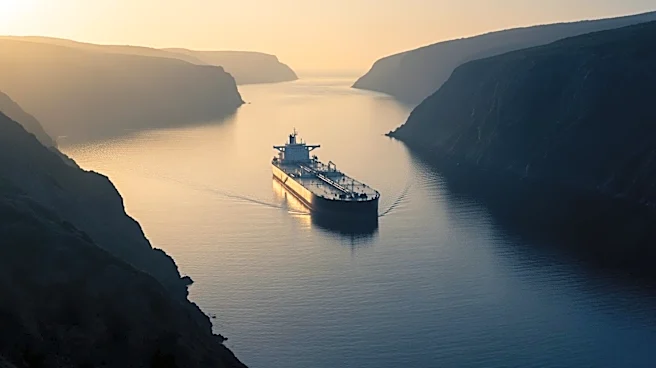
The ongoing conflict in the Middle East has severely disrupted oil exports through the Strait of Hormuz, a critical global oil transit route. As a result, Gulf states have attempted to reroute oil exports through alternative channels, such as Saudi Arabia's
Red Sea terminals and the UAE's port of Fujairah. Despite these efforts, the region's oil exports have plummeted by 49% in March compared to February, with Saudi Arabia, the UAE, and Iraq experiencing significant declines. The International Energy Agency has responded by releasing 400 million barrels from strategic reserves to stabilize the market temporarily. However, these measures are insufficient to fully compensate for the loss of Hormuz's capacity, highlighting the region's logistical challenges.
Why It's Important?
The disruption of oil flows through the Strait of Hormuz has significant implications for global energy markets. As a major artery for oil exports, any blockage or threat to Hormuz can lead to increased oil prices and economic instability. The current situation underscores the vulnerability of global supply chains to geopolitical tensions. The reliance on strategic reserves is a temporary fix, and the inability to fully replace Hormuz's capacity could lead to prolonged economic impacts, including higher fuel costs and increased shipping expenses. This situation also emphasizes the need for diversified energy routes and strategies to mitigate future disruptions.
What's Next?
The global community is likely to continue seeking alternative routes and solutions to address the shortfall in oil supply. Gulf states may further invest in infrastructure to enhance bypass capacities, while international efforts may focus on diplomatic resolutions to stabilize the region. The ongoing reliance on strategic reserves suggests that energy markets will remain volatile, with potential long-term shifts in trade patterns and energy policies. Stakeholders, including governments and energy companies, will need to adapt to a more complex and costly logistics network, potentially accelerating the transition to alternative energy sources.
Beyond the Headlines
The current crisis highlights the geopolitical significance of energy routes and the strategic importance of the Strait of Hormuz. It raises questions about energy security and the resilience of global supply chains in the face of geopolitical conflicts. The situation may prompt a reevaluation of energy policies and investments in renewable energy sources to reduce dependency on vulnerable transit routes. Additionally, the economic strain on Gulf states could have broader implications for regional stability and international relations, as countries navigate the challenges of maintaining energy exports amid ongoing tensions.