
What's Happening?
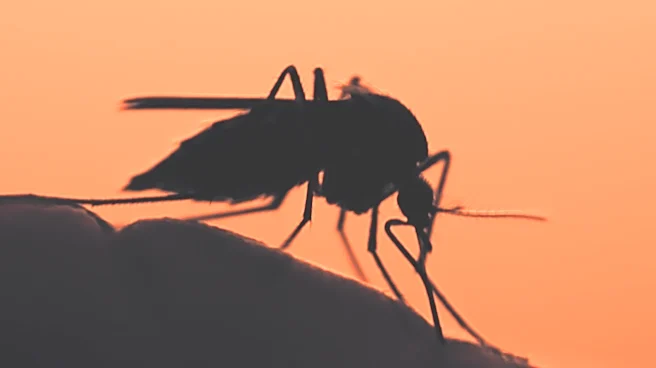
The Metropolitan Mosquito Control District (MMCD) reported that mosquito numbers were significantly below average throughout the entire 2026 season. This reduction is primarily attributed to dry weather
conditions experienced during the year. The most common summer species, Aedes vexans, which is heavily influenced by rainfall, saw numbers well below normal, impacting the overall seasonal averages. Every week in 2026 recorded below-average counts of human-biting mosquitoes in MMCD traps, with peak weeks in late June through July showing counts at least half of the 10-year average. This contrasts sharply with 2025, which was an unusually busy year for the MMCD due to abundant rain, record numbers of West Nile virus cases, and higher instances of invasive mosquito species. The lack of moisture in 2026 also resulted in low West Nile virus cases, making it a comparatively quiet year for mosquito control efforts.
Why It's Important?
The 2026 mosquito season's low activity, as reported by the MMCD, highlights the critical role of environmental factors, particularly rainfall, in influencing mosquito populations and the associated public health risks. A reduction in mosquito numbers directly correlates with a decreased risk of mosquito-borne diseases like West Nile virus, which can cause severe illness in humans. This outcome provides a temporary reprieve for public health systems and residents who typically face nuisance and health threats from high mosquito activity. For the MMCD, a quieter season allows for resource allocation to other areas of public health or maintenance, though it also underscores the unpredictability of pest control needs year-to-year. Understanding these fluctuations is vital for long-term planning in public health and environmental management, as it informs resource deployment, surveillance strategies, and public awareness campaigns for future seasons.
What's Next?
While the 2026 season was quiet, the MMCD will continue to monitor weather patterns and their potential impact on future mosquito populations. The district will likely analyze data from 2026 in conjunction with previous years to refine its predictive models and operational strategies. Preparations for the 2027 season will involve assessing equipment, staffing, and surveillance protocols, anticipating that conditions could revert to more favorable ones for mosquito breeding. Public health advisories will remain a key component of their strategy, reminding residents about personal protection and source reduction. The MMCD will also continue its efforts to track invasive mosquito species, regardless of overall population numbers, to prevent their establishment and potential spread of new diseases.
Beyond the Headlines
The stark contrast between the 2025 and 2026 mosquito seasons underscores the broader implications of climate variability on public health infrastructure. Extended periods of drought, while reducing mosquito populations, can have other significant environmental and economic consequences, such as water scarcity and increased wildfire risk. Conversely, years with excessive rainfall can lead to surges in vector-borne diseases. This variability necessitates a flexible and resilient public health response system capable of adapting to rapidly changing environmental conditions. The MMCD's experience highlights the need for continuous investment in scientific research to better understand the complex interplay between climate, ecosystems, and disease vectors. Such research can lead to more sophisticated forecasting tools and targeted interventions, moving beyond reactive measures to proactive public health protection in the face of a changing climate.