






What's Happening?
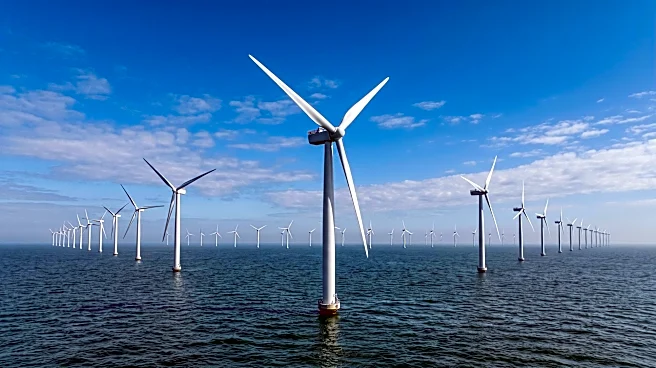
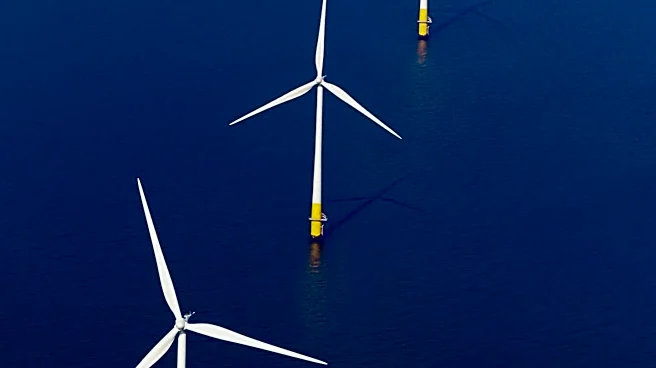
Ørsted, in a 50-50 joint venture with Global Infrastructure Partners' Skyborn Renewables, has completed the installation of all 65 turbines at the 704 MW Revolution Wind offshore wind project. This significant milestone brings the project closer to full
energization, which is anticipated by the end of 2026. The Revolution Wind farm is located more than 15 miles south of the Rhode Island coast and has already begun delivering electricity to the New England grid as of March 14. Once fully operational, the project is expected to generate enough electricity to power over 350,000 homes and businesses, operating under fixed-price, 20-year agreements with utilities in Rhode Island and Connecticut. The completion of turbine installation follows a construction process that included two stop-work orders, as noted by the New England for Offshore Wind advocacy coalition.
Why It's Important?
The completion of turbine installation at the Revolution Wind project marks a crucial step in expanding renewable energy infrastructure in the U.S., particularly in the New England region. This project is vital for enhancing energy security and reducing reliance on fossil fuels, aligning with broader national goals for clean energy transition. The fixed-price, 20-year agreements with utilities in Rhode Island and Connecticut provide long-term energy stability and predictability for consumers. Furthermore, analysis from Connecticut's Department of Energy and Environmental Protection suggests that once fully operational, the project could save New England ratepayers as much as $500 million annually in wholesale energy costs. This economic benefit, coupled with the environmental advantages of offshore wind, underscores the project's importance for both regional energy markets and climate objectives.
What's Next?
The immediate next step for the Revolution Wind project is its full energization, which is expected by the end of 2026. This will enable the wind farm to deliver its full capacity of 704 MW to the New England grid, significantly contributing to the region's winter energy reliability. Following full energization, the project will continue to operate under its 20-year power purchase agreements, supplying clean electricity to hundreds of thousands of homes and businesses. The successful completion of this project could also serve as a model and catalyst for future offshore wind developments in the U.S., potentially encouraging more investment and policy support for large-scale renewable energy initiatives. Stakeholders, including energy companies, environmental groups, and state governments, will likely monitor the project's performance and its impact on energy markets and consumer costs.
Beyond the Headlines
The Revolution Wind project's journey, including the challenges faced with stop-work orders, highlights the complexities inherent in large-scale infrastructure projects, particularly in the nascent U.S. offshore wind industry. Overcoming these hurdles demonstrates the resilience and adaptive capacity required for such ventures. The project's success could bolster public and political confidence in offshore wind as a reliable and economically beneficial energy source, potentially influencing regulatory frameworks and permitting processes for future projects. Moreover, the long-term contracts and the projected annual savings for ratepayers underscore a shift towards valuing stable, clean energy sources, which could reshape energy policy and investment strategies across the nation. This development also contributes to the broader narrative of the U.S. transitioning to a green economy, with implications for job creation, technological innovation, and international climate commitments.