



What's Happening?
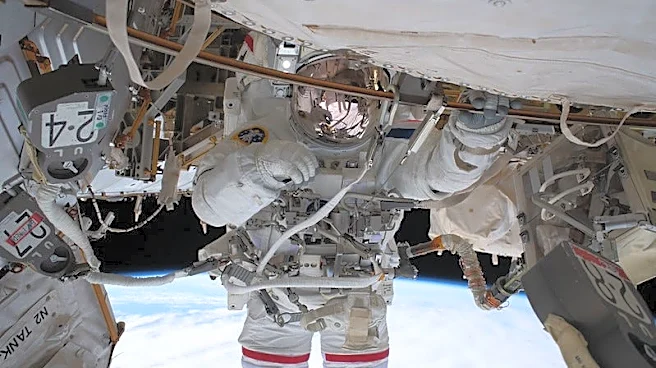
ESA astronaut Sophie Adenot is participating in the Brain-DTI experiment as part of her epsilon mission aboard the International Space Station. This experiment investigates how the human brain adapts to life in microgravity and subsequently recovers upon
returning to Earth. The study utilizes a suite of MRI techniques, including Diffusion Tensor Imaging (DTI) to map neural pathways and detect changes in white matter, and resting-state functional MRI (rs-fMRI) to observe communication between brain regions. Additionally, standard anatomical sequences measure brain shifts within the skull, ventricle inflation, and cerebrospinal fluid redistribution. These methods collectively provide a comprehensive understanding of neuroplasticity, the brain's ability to reorganize itself in response to new environments. The data collected also contributes to research on Spaceflight Associated Neuro-ocular Syndrome (SANS), a condition affecting astronauts' eyesight during long-duration missions, believed to be linked to increased fluid pressure around the brain and spinal cord.
Why It's Important?
The Brain-DTI experiment holds significant importance for understanding the profound impact of spaceflight on the human brain and body. By studying how astronauts' brains adapt to microgravity and then readapt to Earth's gravity, researchers can gain crucial insights into neuroplasticity. This knowledge is not only vital for ensuring the health and safety of astronauts on extended missions but also has broader implications for medical science. The findings can help people suffering from disorders related to dizziness and vertigo, shedding light on the fundamental mechanisms behind vestibular diseases and recovery. Furthermore, the research into SANS could lead to preventative measures or treatments for this condition, which can impair eyesight and cause other neurological issues in astronauts. The experiment's large dataset, accumulated since 2013, represents the most extensive neuroimaging study in human spaceflight history, providing a robust foundation for future discoveries.
What's Next?
Post-flight MRI scans are being collected from Sophie Adenot as quickly as possible after her return to Earth, as the brain begins readapting to gravity almost immediately. Three MRI sessions were conducted within the first two weeks of her return, and a final scan is planned six months later. These multiple data points will allow researchers to determine the trajectory of the brain's readaptation, whether it is linear, exponential, or more complex, and how long full neurological recovery takes after an extended stay in space. The ongoing collection of data from more astronauts, particularly female astronauts to assess potential sex differences, will continue to enhance the study's statistical significance. The collaborative nature of BRAIN-DTI, involving experts from various countries and supported by BELSPO-Prodex and ESA, ensures a broad scientific effort to advance understanding in this critical area.
Beyond the Headlines
The Brain-DTI experiment delves into the ethical and long-term implications of human space exploration, particularly concerning the physiological challenges faced by astronauts. The study's focus on neuroplasticity highlights the remarkable adaptability of the human brain but also underscores the potential for long-term neurological changes due to prolonged exposure to microgravity. Understanding these changes is crucial for planning future long-duration missions, such as those to Mars, where astronauts will experience even longer periods away from Earth's gravitational pull. The research also touches upon the broader societal benefit of space research, as insights gained from studying astronauts' brains can be applied to terrestrial medical conditions. The international collaboration involved in BRAIN-DTI exemplifies how global scientific efforts can address complex challenges and push the boundaries of human knowledge, ultimately benefiting both space travelers and individuals on Earth.