








What's Happening?
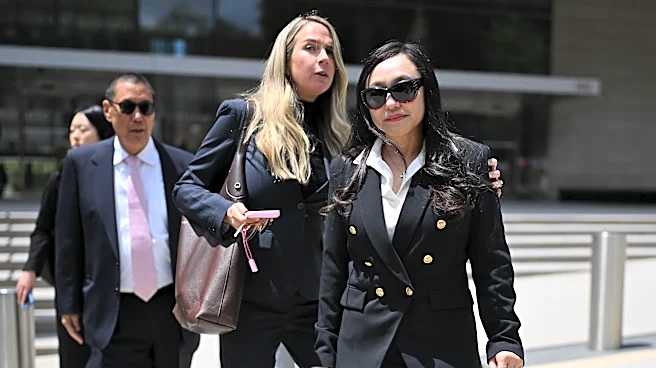
Former Arcadia Mayor Eileen Wang has pleaded guilty to being an illegal agent of the Chinese government, a development that has stirred concerns within the Asian American community in Arcadia, California. Wang, who was elected to the city council in 2022,
admitted to promoting pro-Beijing articles on a news website she managed without notifying U.S. authorities, as required by law. This case has sparked fears of increased scrutiny and potential backlash against the broader Chinese and Asian American community in the area. Arcadia, located in the San Gabriel Valley, has seen significant demographic changes over the past two decades, becoming a hub for immigrants from China, Taiwan, and Hong Kong. The community is now grappling with the implications of Wang's actions and the broader issue of foreign influence in local politics.
Why It's Important?
The guilty plea of Eileen Wang highlights ongoing concerns about foreign influence in U.S. politics, particularly from China. The case underscores the U.S. Department of Justice's intensified efforts to combat Chinese espionage and influence operations. For the Asian American community in Arcadia, this development raises fears of increased racial profiling and discrimination, potentially exacerbating existing tensions. The incident also reflects broader geopolitical dynamics, as the U.S. and China continue to navigate a complex relationship marked by economic rivalry and political tension. The situation in Arcadia serves as a microcosm of these larger issues, illustrating the challenges faced by immigrant communities in maintaining their cultural identity while navigating political pressures.
What's Next?
Following Wang's guilty plea, there may be increased scrutiny on local politicians and community leaders in Arcadia and similar regions. The city council may face pressure to implement measures ensuring transparency and preventing foreign influence in local governance. Additionally, community leaders and activists may work to address concerns of racial profiling and discrimination, advocating for policies that protect the rights and dignity of Asian Americans. The broader implications of this case could lead to heightened vigilance by federal authorities in monitoring foreign influence operations, potentially impacting diplomatic relations between the U.S. and China.
Beyond the Headlines
The case of Eileen Wang raises important questions about the ethical responsibilities of public officials and the potential vulnerabilities in local governance systems. It also highlights the cultural and social dynamics within immigrant communities, where individuals may face conflicting loyalties and pressures. The incident could prompt discussions about the role of diaspora communities in international relations and the ethical considerations of political engagement. Long-term, this case may influence how immigrant communities are perceived and treated in the U.S., potentially affecting policy decisions and public sentiment.