
What's Happening?
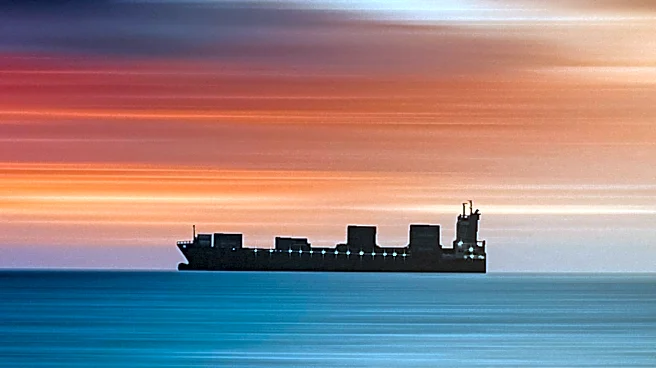
Iran has executed strategic maneuvers in the Strait of Hormuz and the Red Sea, impacting global shipping routes. The U.S. has conducted airstrikes targeting Iranian military infrastructure to counter these
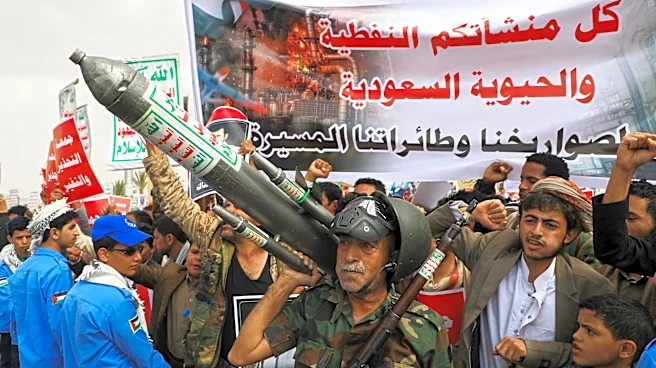
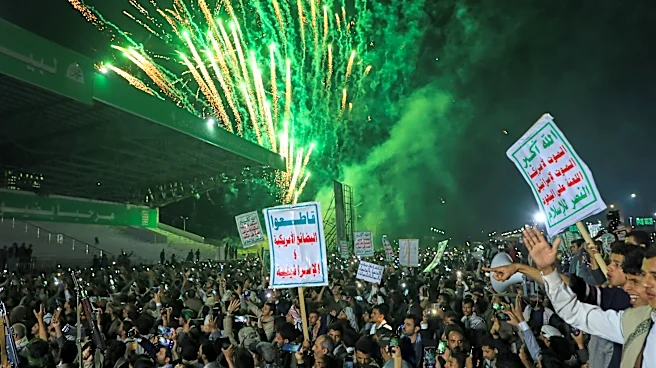
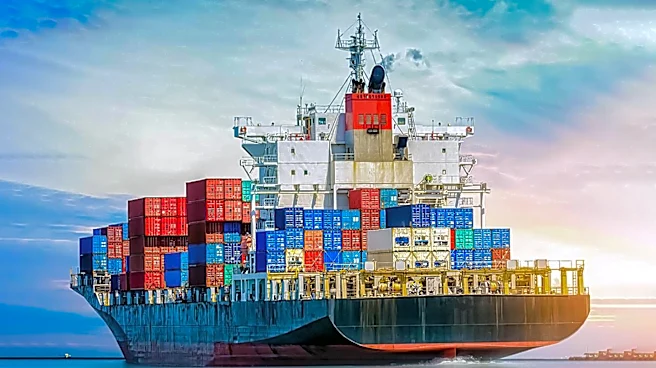
actions. Meanwhile, the Iran-backed Houthis in Yemen have escalated threats to commercial shipping through the Bab el-Mandeb Strait, causing tankers to reverse course and delay departures. These developments have led to a significant reduction in vessel traffic through these critical maritime chokepoints, raising concerns about potential spikes in oil prices.
Why It's Important?
The closure of these vital shipping routes could have severe implications for global energy supplies and international trade. The Strait of Hormuz and Bab el-Mandeb are crucial for the transportation of oil and other commodities. Disruptions in these areas could lead to increased oil prices, affecting economies worldwide. The situation also highlights the geopolitical tensions in the region, with Iran's actions challenging U.S. influence and security commitments. The ongoing conflict could further destabilize the region, impacting global markets and international relations.
What's Next?
The U.S. and its allies may need to increase diplomatic and military efforts to ensure the security of these shipping routes. Potential responses could include increased naval presence in the region or diplomatic negotiations to de-escalate tensions. The international community will likely monitor the situation closely, as prolonged disruptions could lead to broader economic and political consequences. Stakeholders, including shipping companies and oil producers, will need to adapt to the evolving security landscape to mitigate risks.