




What's Happening?
The European Union is exploring alternative energy and trade routes in response to the disruption caused by the Iran war, which has significantly impacted global fuel prices. European Commission President Ursula von der Leyen has highlighted the India-Middle-East-Europe
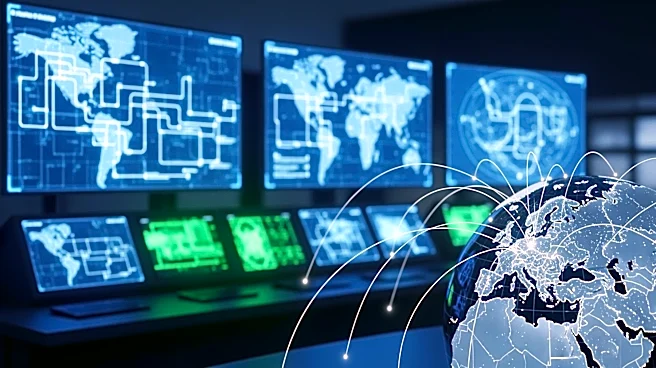
Economic Corridor (IMEC) as a potential solution to enhance the EU's energy security and supply chain resilience. This initiative aims to create new pipelines and transmission cables, bypassing conflict-prone areas like the Strait of Hormuz. The EU has shown political commitment to IMEC, although only a few member states are formal signatories. The project also involves collaboration with Gulf states and India, with Israel expressing support. However, the normalization of relations between Israel and Saudi Arabia is seen as crucial for the project's success.
Why It's Important?
The EU's pursuit of alternative energy routes is critical for reducing its dependency on volatile regions and ensuring stable energy supplies. The Iran war has underscored the vulnerability of existing routes, prompting the EU to seek more resilient options. This move could lead to significant economic and strategic shifts, as the EU aims to diversify its energy sources and reduce reliance on Russian energy. The development of IMEC and other infrastructure projects could also foster closer ties between the EU and Gulf countries, potentially leading to increased investments in renewable energy. The initiative aligns with the EU's green policies, promoting sustainable energy solutions.
What's Next?
The EU is expected to continue discussions with Gulf countries and other stakeholders to advance the IMEC project. The focus will be on practical implementation, including the construction of new pipelines and energy infrastructure. The EU may also encourage European companies to invest in renewable energy projects in the Gulf region. However, the project's progress will depend on geopolitical developments, particularly the normalization of relations between Israel and Saudi Arabia. The EU will likely seek to align these projects with its green energy goals, ensuring that new infrastructure supports both current and future energy needs.