







What's Happening?
The U.S. government has granted a 90-day extension of the Jones Act waiver, allowing foreign-flagged vessels to continue transporting specific domestic cargo between American ports until mid-February 2027. This marks the third renewal of the waiver, initially
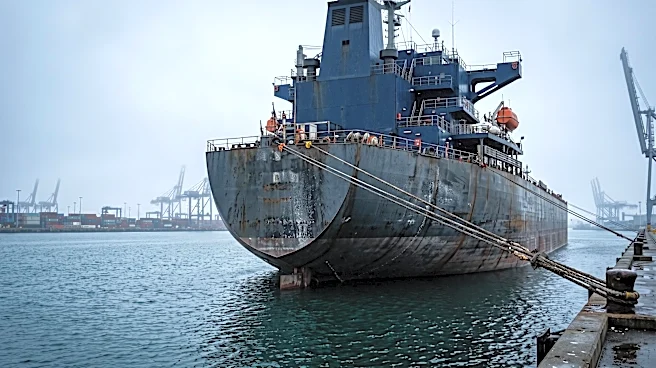
implemented in March, and was approved by the Department of Homeland Security, as announced by U.S. Customs and Border Protection on November 13. The new waiver period begins on November 16, with eligible cargo required to be loaded by 11:59 PM Eastern Time on February 14, 2027. Foreign-flagged ships must still obtain case-by-case authorization for coastwise voyages, and shippers must file vessel availability requests. The Maritime Administration will then assess if sufficient Jones Act-compliant tonnage is available. This extension maintains the stricter authorization regime established in August, rather than the broader exemptions previously available. The initial waiver was introduced in March due to disruptions in U.S. fuel supplies and shipping markets following the outbreak of war with Iran, permitting designated commodities to be transported by ships typically restricted from such trade under the Jones Act.
Why It's Important?
This extension of the Jones Act waiver carries significant implications for the U.S. maritime industry and domestic shipping. The American Maritime Partnership, which advocates for U.S. maritime interests, has strongly condemned the renewal, urging Washington to terminate the exemption. The organization is concerned that allowing foreign vessels to operate on ordinary commercial routes could displace American ships and crews, undermining the core purpose of the Jones Act. The Jones Act mandates that domestic waterborne cargo transportation be reserved for vessels that are U.S.-built, U.S.-owned, U.S.-flagged, and meet specific statutory criteria. While the waiver aims to address potential disruptions in fuel supplies and shipping markets, its continued application could lead to economic disadvantages for U.S. maritime businesses and workers. The debate highlights a tension between ensuring supply chain flexibility during crises and protecting domestic industries and national security interests as defined by the Jones Act.
What's Next?
The American Maritime Partnership is expected to continue its advocacy efforts, pressing Washington to maintain strict scrutiny of individual applications for the waiver and to ultimately end the exemption. The ongoing debate will likely involve close monitoring by U.S. authorities of the impact of foreign-flagged vessels on domestic shipping routes and the availability of Jones Act-compliant tonnage. Stakeholders, including U.S. maritime companies, labor unions, and policymakers, will be closely watching how the government balances the need for supply chain resilience with the protection of domestic maritime interests. Future decisions regarding further extensions or modifications to the waiver will likely be influenced by the evolving geopolitical landscape, domestic economic conditions, and the capacity of the U.S. maritime fleet to meet national shipping demands.
Beyond the Headlines
The repeated extension of the Jones Act waiver raises deeper questions about the long-term resilience and capacity of the U.S. domestic maritime industry. While initially a response to a specific crisis, the continued reliance on foreign-flagged vessels for domestic cargo transport could signal underlying vulnerabilities in the U.S. shipping infrastructure or a perceived lack of sufficient U.S.-flagged capacity. This situation could prompt a re-evaluation of investment in U.S. shipbuilding and maritime training programs to bolster domestic capabilities. Furthermore, the controversy highlights the complex interplay between national security, economic policy, and international trade relations. The Jones Act is often viewed as a critical component of U.S. national security, ensuring a domestic merchant marine and shipbuilding base. Any perceived erosion of its provisions, even temporarily, could have long-term strategic implications for the nation's ability to project power and maintain economic independence.