





What's Happening?
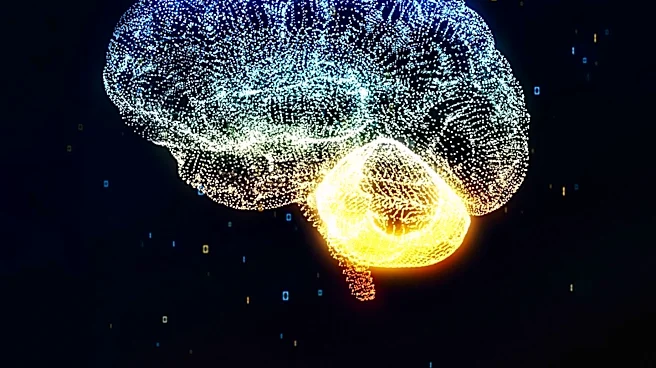
Researchers at Stanford University, led by Nirao Shah, have identified a tiny set of neurons in the preoptic hypothalamus of female mice that are crucial for successful embryo implantation and maintaining pregnancy. These neurons, which constitute less
than 0.001% of all brain cells, undergo a significant transformation during pregnancy, with gene expression levels changing over 30-fold. This conversion creates a new class of neurons that function differently by mid-gestation and are exclusive to pregnancy. The neurons possess receptors for pregnancy-related hormones like progesterone, which may activate them after fertilization. When these specific neurons were absent in female mice, they could mate and become pregnant, but all pregnancies ended early due to the inability of embryos to implant in the uterus lining. The study also found that women possess the same set of neurons in their preoptic hypothalamus, suggesting a similar role in human pregnancies.
Why It's Important?
This discovery holds significant implications for understanding and potentially treating unexplained recurrent miscarriages and difficulties with in vitro fertilization (IVF) in humans. Currently, over half of miscarriages are attributed to genetic errors, but a substantial portion remains unexplained. Many individuals undergoing IVF experience implantation failures despite having genetically healthy embryos, and some conceive naturally but suffer recurrent early pregnancy losses without a clear cause. The identification of these neurons suggests that some fertility challenges may stem from the failure of specific neural circuits to recognize, monitor, or adapt to gestation. This opens new avenues for research into therapeutic interventions, such as identifying fundamental signaling molecules released by these neurons that could be targeted to improve implantation and pregnancy maintenance. The findings could lead to novel treatments for fertility issues that are currently untreatable.
What's Next?
Further research is necessary to fully understand the mechanisms by which these newly discovered neurons facilitate embryo implantation and maintain pregnancy. Scientists will need to investigate how these neurons communicate with the uterus, whether through hormonal signals or other secreted factors. Additionally, researchers will explore if these neurons undergo permanent changes due to pregnancy or if they revert to their original state. The presence of similar neurons in the human brain suggests that future studies could focus on understanding their role in human fertility. If the specific signaling pathways can be identified, it could pave the way for developing new therapeutic strategies, such as drugs that mimic or enhance the function of these neurons, to address unexplained infertility and recurrent pregnancy loss. The long-term goal is to translate these findings into clinical applications that can improve pregnancy outcomes for women.
Beyond the Headlines
The discovery of these pregnancy-specific neurons highlights the intricate and often overlooked neurological underpinnings of reproductive biology. Beyond the immediate clinical applications for fertility, this research deepens our understanding of how the brain adapts and orchestrates complex physiological processes like gestation. It challenges the traditional view of reproductive health as solely a hormonal or anatomical matter, emphasizing the critical role of neural circuits. This could lead to a more holistic approach to reproductive medicine, integrating neuroscience with endocrinology and gynecology. The study also raises broader questions about the evolutionary conservation of these neural mechanisms across species and how environmental or lifestyle factors might impact their function, potentially influencing reproductive success. The concept of a 'cell type exclusive to pregnancy' underscores the profound biological adaptations that occur during gestation, offering a new lens through which to view maternal physiology.