
What's Happening?
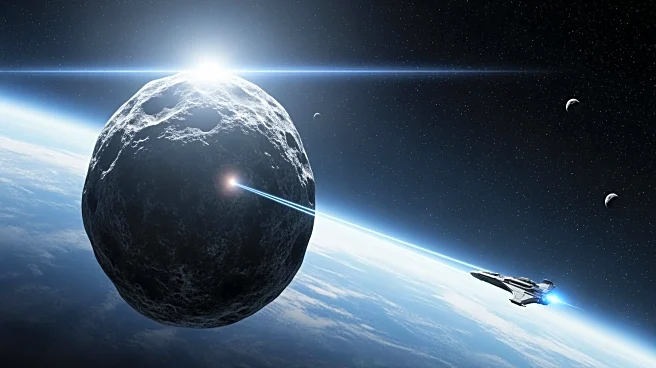
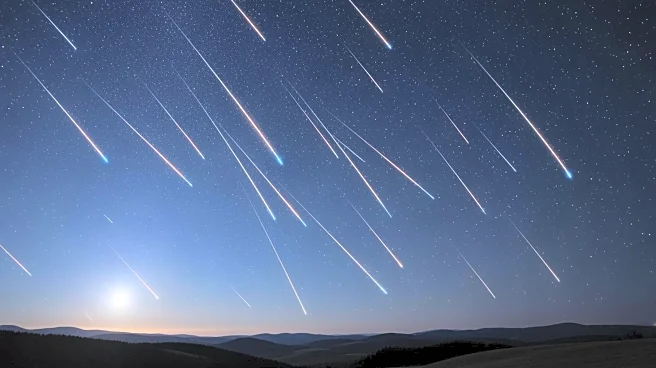
The Geminid meteor shower, known for its bright and reliable display, is set to peak overnight from December 13 into the morning of December 14. Unlike most meteor showers that originate from comets, the Geminids
are formed from debris of the asteroid 3200 Phaethon. According to NASA, the particles from this asteroid are denser than typical comet debris, resulting in a more vivid meteor display. The best viewing times are between midnight and 2 a.m., before the crescent moon rises, which could otherwise interfere with visibility. NASA advises finding a location with clear skies and minimal light pollution for optimal viewing. The meteors will appear to radiate from the constellation Gemini, but they can be seen across the entire night sky.
Why It's Important?
The Geminid meteor shower is significant as it provides one of the most spectacular and consistent celestial events visible from Earth. This annual event offers an opportunity for both amateur and professional astronomers to observe and study meteors. The unique origin of the Geminids from an asteroid rather than a comet adds scientific interest, as it allows researchers to study the differences in meteor composition and behavior. For the general public, the event is a chance to engage with astronomy and appreciate the natural wonders of the night sky, potentially inspiring interest in science and space exploration.
What's Next?
As the peak of the Geminid meteor shower approaches, skywatchers are encouraged to prepare by selecting optimal viewing locations and times. The American Meteor Society suggests that the best viewing conditions occur when the sky is darkest, which is typically after midnight. Observers should also be aware of weather conditions that could affect visibility. Following the peak, meteor activity will gradually decrease, but some meteors may still be visible in the days following. This event may also prompt educational and community events focused on astronomy and space science.