





What's Happening?
Recent discussions highlight significant advancements in cancer research, particularly in making previously 'undruggable' proteins therapeutic targets, alongside the growing prominence of cancer as a political issue in the U.S. Chemist Kevan Shokat was
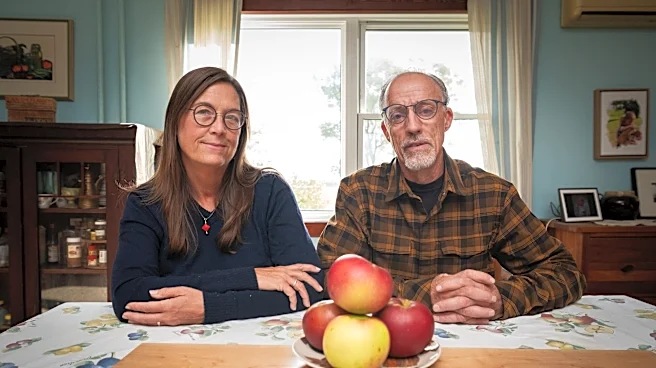
recognized with the 2026 Stephenson Global Prize for his work in making the KRAS protein druggable, a breakthrough that has led to the development of drugs like daraxonrasib. This scientific progress is occurring as cancer incidence rates in Iowa are rising faster than in any other state, making cancer a central topic in midterm political debates. Iowa has ranked second nationally for new cancer cases for three consecutive years. This local political focus on cancer reflects a broader national concern, as evidenced by the administration's failed attempt to severely cut the NIH and NCI budgets, suggesting a recognition of the public's prioritization of oncology.
Why It's Important?
The dual focus on scientific breakthroughs and political engagement in cancer is crucial for the future of oncology in the U.S. Shokat's work on KRAS represents a major leap in targeted therapy, offering new hope for patients with cancers driven by these mutations, particularly in pancreatic cancer. This kind of innovation drives the development of more effective and less toxic treatments. Concurrently, the politicization of cancer, especially in states like Iowa, signals a growing public demand for action from policymakers. This increased political attention can translate into greater funding for research, improved access to care, and public health initiatives aimed at prevention. The pushback against proposed budget cuts for the NIH and NCI underscores the bipartisan support for cancer research, indicating that public and political will can safeguard critical funding for scientific progress.
What's Next?
In the realm of research, the success of drugs like daraxonrasib will likely spur further investigation into other previously 'undruggable' targets, potentially leading to a new era of targeted cancer therapies. Researchers will continue to explore the mechanisms of action and resistance to these new drugs to optimize their use. Politically, the heightened awareness of cancer in states like Iowa could lead to specific policy proposals aimed at addressing rising incidence rates, such as increased funding for state cancer registries, prevention programs, or enhanced access to screening and treatment. Nationally, the sustained public and political interest in cancer will likely ensure continued advocacy for robust funding for the National Institutes of Health (NIH) and the National Cancer Institute (NCI), influencing future budget allocations and research priorities.
Beyond the Headlines
The narrative of cancer research and policy intertwines scientific ingenuity with societal priorities. Shokat's approach to viewing KRAS as a 'chemistry problem' rather than solely a 'biology problem' highlights the interdisciplinary nature of modern scientific breakthroughs, where novel perspectives can unlock solutions. On the policy front, Iowa's experience serves as a microcosm of how local health crises can escalate into significant political issues, demonstrating the direct link between public health outcomes and electoral concerns. This dynamic suggests a potential shift where health metrics, particularly cancer rates, could become more influential in political discourse and policy-making across the nation, pushing for more proactive and data-driven public health strategies. The bipartisan nature of cancer as an issue also offers a rare common ground in an often-polarized political landscape, potentially fostering collaborative efforts for national health initiatives.