








What's Happening?
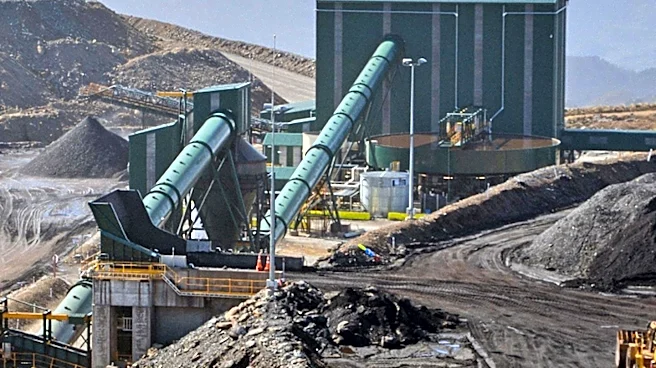
Chinese companies are increasingly investing in processing plants across Africa, moving away from the traditional pit-to-ship model of raw material exportation. Countries like Zimbabwe, Namibia, Mozambique, Ghana, and Guinea are enforcing local processing rules,
compelling international firms to build domestic facilities. This shift aims to add value to local economies by transforming raw materials into finished products, such as lithium into sulphate or carbonate and bauxite into alumina. The move is part of a broader strategy to enhance local economic benefits and reduce dependency on raw material exports.
Why It's Important?
The investment by Chinese companies in African processing plants marks a significant shift in the continent's economic landscape. By focusing on local processing, African nations can capture more value from their natural resources, leading to job creation and economic growth. This strategy also aligns with efforts to diversify economies and reduce reliance on raw material exports. For Chinese firms, these investments provide access to valuable resources and align with China's broader industrial expansion strategy. The collaboration could strengthen economic ties between China and Africa, fostering mutual benefits.
What's Next?
As more African countries adopt local processing rules, additional investments from international firms are expected. This trend could lead to the establishment of more processing facilities, further boosting local economies. African governments may continue to refine policies to attract foreign investment while ensuring sustainable development. The success of these initiatives could encourage other regions to adopt similar strategies, potentially reshaping global trade dynamics. Monitoring the impact of these investments on local communities and economies will be crucial in assessing their long-term benefits.