






What's Happening?
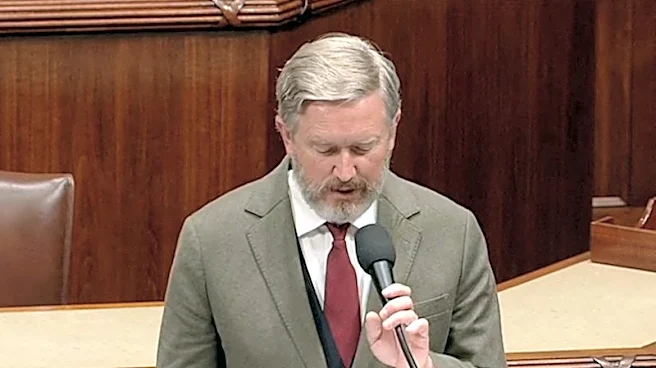
Representative Young Kim has introduced the 'Stop Congressional Self-Enrichment Resolution,' aimed at preventing members of Congress from using taxpayer-funded earmarks to increase their personal wealth. She was joined by Representatives Jared Golden
and Brian Fitzpatrick (R-Pa.) in this initiative. The proposed resolution seeks to tighten conflict-of-interest rules for congressional earmarks, addressing a perceived loophole in current House rules. While existing rules require lawmakers to certify no direct financial conflicts, they do not explicitly cover indirect benefits. The resolution would mandate disclosure that no member, spouse, immediate family member, or any entity with a material financial interest would benefit from an earmark. The lawmakers stated that the purpose of this change is to strengthen anti-corruption rules, enhance transparency, and ensure that federal funds are directed towards constituents rather than serving the financial interests of lawmakers.
Why It's Important?
This resolution addresses a critical aspect of government ethics and public trust. Earmarks, while intended to direct federal funding to specific projects or programs within a lawmaker's district, have historically been a source of controversy due to concerns about potential self-enrichment or conflicts of interest. By seeking to clarify and strengthen disclosure requirements for indirect benefits, the resolution aims to increase accountability and reduce the perception of corruption in Congress. If passed, this measure could significantly impact how federal funds are allocated and overseen, potentially leading to greater scrutiny of earmark requests and a more transparent process. This could benefit taxpayers by ensuring that funds are used for their intended public purpose, rather than for private gain, and could help restore public confidence in the integrity of legislative processes.
What's Next?
The 'Stop Congressional Self-Enrichment Resolution' has been introduced and will now go through the legislative process. This typically involves committee review, potential amendments, and votes in both the House and Senate. The resolution's proponents will likely advocate for its swift passage, emphasizing its importance for ethical governance. However, like all legislative proposals, it will face scrutiny and debate, and its ultimate success will depend on securing sufficient support from other members of Congress. If enacted, it would require new disclosure practices for earmarks, potentially leading to changes in how lawmakers request and justify federal funding for projects in their districts. The resolution's progress will be a key indicator of Congress's commitment to addressing ethical concerns related to financial conflicts of interest.
Beyond the Headlines
The resolution to limit congressional earmark conflicts touches upon the broader issue of ethical governance and the erosion of public trust in political institutions. In an era where transparency and accountability are increasingly demanded by the electorate, measures like this are crucial for demonstrating a commitment to integrity. The concept of 'indirect benefits' is particularly salient, as it addresses subtle ways in which personal financial interests can influence legislative decisions without direct, overt conflicts. This initiative could spark a wider conversation about the ethical standards expected of public officials and the mechanisms needed to enforce them. It also highlights the ongoing tension between the practicalities of legislative deal-making, which often involve earmarks, and the imperative to prevent any appearance of impropriety. The long-term impact could be a more rigorous ethical framework for all legislative activities involving public funds.