
What's Happening?
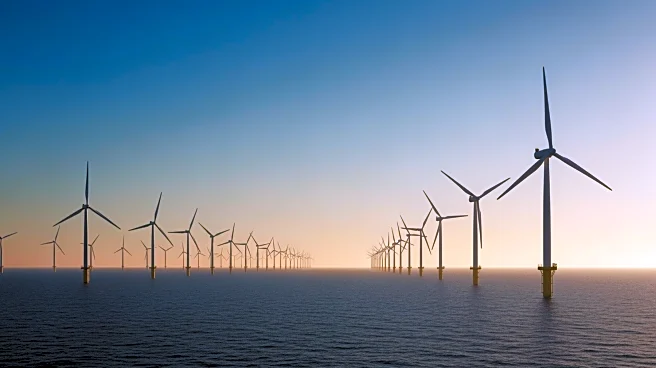
Nine European countries, including the UK, Germany, and the Netherlands, have pledged to develop 300 gigawatts of offshore wind energy capacity in the North Sea by 2050. This initiative aims to enhance
climate-friendly energy production and reduce reliance on foreign energy sources. The commitment includes a focus on joint projects, with 100 gigawatts to be developed collaboratively. The countries will also enhance security measures for these installations, addressing potential threats from sabotage and cyberattacks. The North Atlantic Treaty Organization and the European Commission are involved in this effort, highlighting the strategic importance of securing energy infrastructure.
Why It's Important?
This commitment underscores Europe's dedication to renewable energy, particularly offshore wind technology, despite opposition from figures like President Trump. The initiative is crucial for the European Union's goal of achieving net-zero emissions by mid-century. By increasing offshore wind capacity, Europe aims to improve energy security, reduce energy costs, and support the production of green hydrogen, which is essential for decarbonizing heavy industries. The project also represents a significant step in reducing dependency on fossil fuels and foreign energy sources, particularly in light of geopolitical tensions.
What's Next?
The participating countries will begin implementing security measures and stress-testing components of wind turbines to protect against potential threats. Transmission System Operators are expected to initiate 20 gigawatts of joint projects in the 2030s. The ongoing collaboration among European nations and organizations like NATO will be crucial in ensuring the success and security of these energy projects. As the initiative progresses, it may serve as a model for other regions seeking to expand renewable energy capacity while addressing security concerns.