





What's Happening?
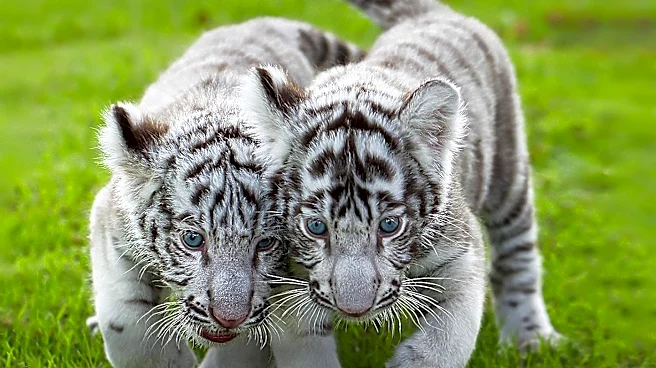
Kemaman Zoo in Bukit Takal, Kijal, has introduced three four-month-old White Bengal tiger cubs to the public, marking a rare and significant event. The cubs, named Rory, Bima, and DB, were born to White Bengal tiger pair Lela Andika and Luna Seroja on March
14, following a 104-day gestation period. This birth is notable as White Bengal tigers typically have one or two cubs per litter, making the arrival of three male cubs particularly remarkable. The cubs' parents were brought to the zoo from Cape Town, South Africa, in 2024. The zoo's veterinary team is closely monitoring the cubs to ensure their health and growth.
Why It's Important?
The birth of these rare White Bengal tiger cubs is a significant achievement for Kemaman Zoo, enhancing its appeal as a tourist destination. The presence of such rare animals is expected to increase visitor numbers, contributing to the local economy and raising awareness about wildlife conservation. The event highlights the importance of zoos in preserving endangered species and educating the public about biodiversity. The successful breeding of these tigers also underscores the zoo's role in global conservation efforts, potentially inspiring similar initiatives in other institutions.
What's Next?
With the debut of the White Bengal tiger cubs, Kemaman Zoo anticipates a rise in visitor numbers, potentially exceeding 1.5 million this year. This increase in tourism could lead to further investments in the zoo's facilities and conservation programs. The zoo's management may also explore partnerships with international conservation organizations to enhance their breeding and preservation efforts. Additionally, the zoo plans to continue monitoring the cubs' development, ensuring they remain healthy and thrive in their environment.
Beyond the Headlines
The birth of the White Bengal tiger cubs at Kemaman Zoo highlights broader conservation challenges and opportunities. It underscores the role of zoos in safeguarding genetic diversity and supporting species survival. This event may prompt discussions on the ethical considerations of breeding programs and the balance between conservation and commercial interests. Furthermore, it raises awareness about the plight of endangered species and the need for global cooperation in wildlife preservation.