






What's Happening?
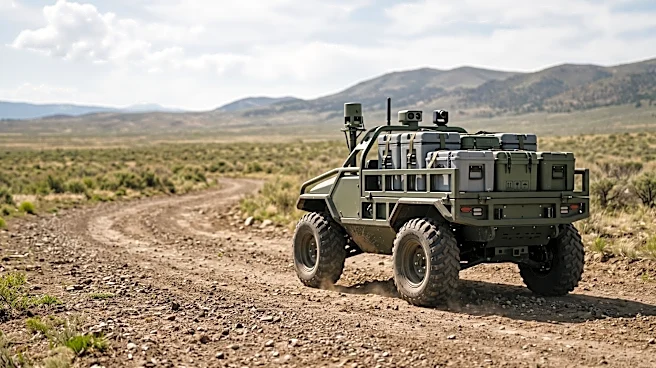
The Pentagon's research arm, DARPA, has conducted tests on autonomous ground robots designed to operate in environments where GPS signals are unavailable. These robots, part of the Robotic Autonomy in Complex Environments with Resiliency (RACER) program,
demonstrated the ability to map terrain and identify potential enemy targets independently. During an exercise at Fort Knox, Kentucky, four uncrewed ground vehicles (UGVs) performed surveillance, searching for enemy forces. A human operator maintained oversight, assigning tasks, reviewing findings, and ultimately making decisions on how to engage targets. This initiative aims to advance uncrewed technologies for the U.S. military, ensuring capabilities in contested or denied environments where traditional navigation methods may be compromised. The software developed for these UGVs allows them to use only onboard sensors for rapid movement and decision-making, and it has been tested on various hardware platforms, including four-wheel and tracked UGVs.
Why It's Important?
This development is crucial for the U.S. military's operational readiness in modern warfare scenarios, particularly in environments where adversaries might employ GPS jamming or other signal disruptions. By enabling autonomous ground robots to navigate and identify targets without relying on GPS, the Pentagon is addressing a significant vulnerability and enhancing the resilience of its forces. This capability allows human operators to remain at a safe distance while still maintaining control and situational awareness, thereby reducing risks to personnel. The ability of these robots to work collaboratively or independently, coupled with human decision-making for engagement, represents a strategic advantage. It also reflects a broader shift towards integrating advanced AI and autonomous systems into military operations, drawing lessons from contemporary conflicts like the war in Ukraine regarding the role and deployment of ground robots.
What's Next?
The lessons learned from the RACER program will inform ongoing developments in uncrewed technologies across the U.S. military. DARPA plans to share these insights with industry partners to further refine and implement these autonomous capabilities. Future efforts will likely focus on enhancing the robots' adaptability to diverse and challenging terrains, such as deserts, swamps, forests, and snowy conditions, which can impact battery life, communication systems, and overall performance. The military will continue to explore alternative precision navigation and timing solutions, alongside traditional tactics, to ensure operational effectiveness in GPS-denied environments. The emphasis will remain on maintaining human oversight and control in robotic operations, even as the autonomy of these systems increases.
Beyond the Headlines
The ethical and legal implications of increasingly autonomous military systems are a significant underlying dimension of this development. While the current framework emphasizes human decision-making for engaging targets, the progression towards greater autonomy raises questions about accountability and the potential for unintended consequences in future conflicts. The integration of AI into battlefield operations also necessitates robust cybersecurity measures to prevent hacking or manipulation of these systems. Furthermore, the development of such advanced robotic capabilities could trigger an arms race among global powers, leading to a proliferation of autonomous weapons systems. The U.S. military's commitment to human-in-the-loop control is a critical safeguard, but the long-term trajectory of AI in warfare will require continuous ethical deliberation and policy development.