






What's Happening?
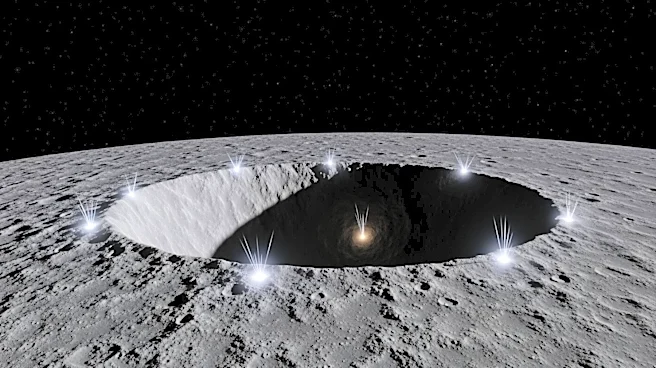
NASA's Artemis 2 mission, the first crewed moon flight since 1972, has reported significant observations of meteoroid impact flashes on the moon's far side. The astronauts, who launched from Florida on April 1, 2026, observed these flashes during their
flyby on April 6. These flashes, difficult to capture with cameras, were seen with the unaided eye, highlighting the value of human observation in space exploration. The observations are part of a broader effort involving citizen scientists on Earth, contributing to the Impact Flash citizen science project under NASA's GEODES unit. This data is crucial for understanding the impact flux on the moon, which is vital for planning NASA's Artemis Base Camp near the lunar south pole.
Why It's Important?
The observations from Artemis 2 are pivotal for lunar research and future moon missions. Understanding meteoroid impacts is essential for the safety and design of lunar bases, such as the planned Artemis Base Camp. The data helps scientists assess the frequency and impact of meteoroid strikes, which is crucial for designing structures that can withstand such events. This research also aids in understanding the moon's geological history and the potential hazards for future human and robotic missions. The collaboration with citizen scientists expands the scope of data collection, providing a more comprehensive understanding of lunar impacts.
What's Next?
The data collected will inform the design and safety measures for the Artemis Base Camp, which aims to establish a sustainable human presence on the moon. Future missions will continue to gather data on meteoroid impacts, enhancing our understanding of lunar hazards. The ongoing collaboration with citizen scientists will likely expand, providing more opportunities for public engagement in space exploration. As NASA prepares for more complex missions, including potential manned missions to Mars, the insights gained from Artemis 2 will be invaluable.