


What's Happening?
A new study suggests that astronomers may have been incorrect about the primary force that ended the 'Cosmic Dark Age,' the period when the universe was shrouded in a fog of neutral hydrogen atoms. Previously, it was widely believed that supernovas, the explosive
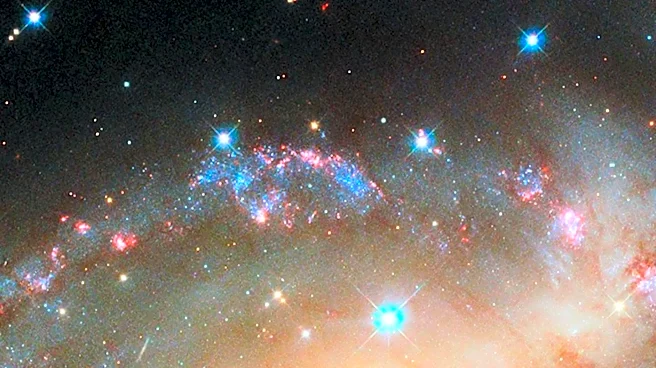
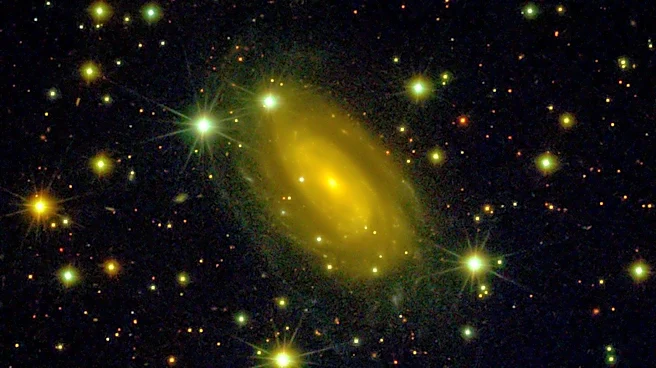
deaths of massive stars, were the main drivers of reionization, the process that ionized the neutral hydrogen and allowed light to travel freely. However, research published in Nature Astronomy by Cody Carr and colleagues presents evidence that supernovas might have had the opposite effect, trapping the ionizing ultraviolet (UV) radiation (Lyman continuum or LyC photons) instead of scattering them. The study, which observed six star-forming galaxies, indicates that the intense light from newborn stars, rather than supernova-driven winds, was the more viable source for clearing the cosmic fog.
Why It's Important?
This research challenges a fundamental aspect of cosmological evolution, potentially requiring a significant rethinking of how the universe transitioned from its opaque early state to the transparent cosmos we observe today. Understanding the Epoch of Reionization is crucial for comprehending the formation and evolution of the first stars and galaxies. If supernovas were not the primary drivers, it implies that the early universe's energy budget and the mechanisms of light escape from nascent galaxies were different than previously modeled. This could impact our understanding of galaxy formation, the distribution of matter, and the overall timeline of cosmic development, influencing future astrophysical theories and observational strategies.
What's Next?
The findings suggest that cosmological simulations, which often depict LyC escape peaking after supernova-driven winds, may need to be revised. Future research will aim to obtain additional galactic samples and higher-resolution observations across various wavelengths to further validate these findings. Scientists will also focus on understanding the precise interplay between stellar winds, supernova events, and the escape of ionizing radiation from early galaxies. This will involve developing more sophisticated models that accurately reflect the observed two-phase process, where initial stellar winds facilitate LyC escape, followed by supernova-driven processes that may impede it. The ultimate goal is to build a more accurate picture of the universe's early history.
Beyond the Headlines
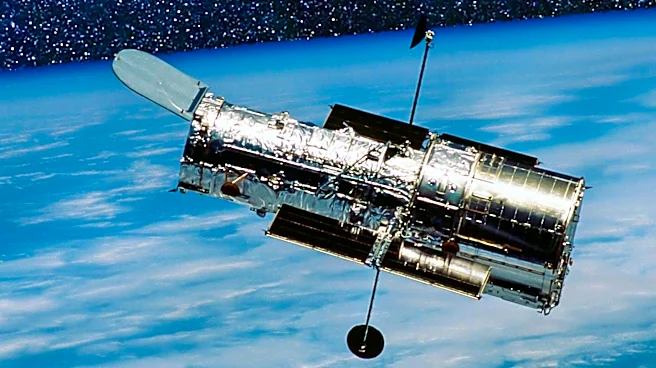
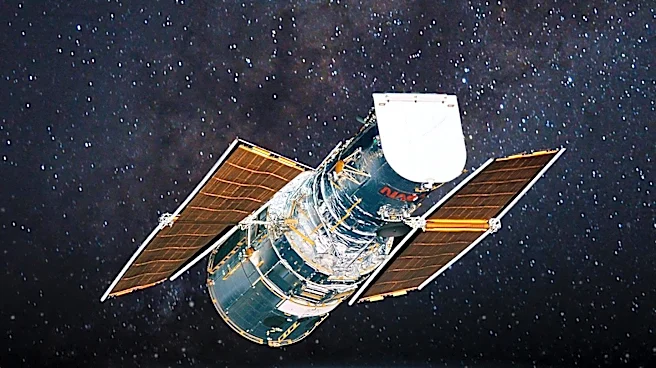
The study highlights the dynamic and complex nature of the early universe, where even seemingly destructive events like supernovas might have had nuanced and sometimes counterintuitive effects on cosmic evolution. It also underscores the iterative nature of scientific discovery, where long-standing theories are continually tested and refined with new observational data and analytical techniques. The use of the Hubble Space Telescope to observe distant galaxies as analogues for the ancient universe demonstrates the power of modern astronomy to peer back in time. This ongoing quest to understand the universe's origins touches upon profound questions about our place in the cosmos and the fundamental forces that govern its existence.