





What's Happening?
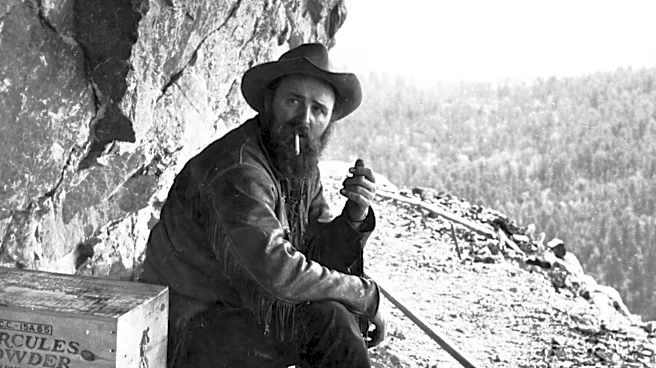
A U.S. Forest Service archaeologist has discovered four cases of dynamite, believed to date back to the 1930s, buried in the backcountry of Chelan County, Washington. This explosive discovery prompted a public safety response from the Washington State
Patrol Bomb Squad. Despite challenging conditions, the bomb squad successfully neutralized the historic dynamite, according to the Chelan County Sheriff's Office. The origins of the dynamite remain unknown, but its presence adds an intriguing element to a county with a significant mining history, as gold was discovered in Chelan County's Blewett district in 1860. The incident highlights the potential dangers posed by old, abandoned explosives, which can become unstable and hazardous over time.
Why It's Important?
This discovery underscores the persistent dangers that historical artifacts, particularly explosives, can pose to public safety, even decades after their abandonment. The successful neutralization by the Washington State Patrol Bomb Squad demonstrates the critical role of specialized emergency services in managing such hazards. For residents and visitors to areas with historical industrial activities, like mining, this event serves as a stark reminder of potential hidden dangers. It also emphasizes the importance of inter-agency cooperation between federal (U.S. Forest Service), state (Washington State Patrol), and local (Chelan County Sheriff's Office) authorities in addressing unexpected public safety threats. The incident could lead to increased awareness campaigns about reporting suspicious historical items in wilderness areas.
What's Next?
While the immediate threat has been neutralized, the discovery may prompt further investigations into the history of the area to understand why the dynamite was buried and if other similar caches might exist. Local authorities and the U.S. Forest Service may consider reviewing protocols for surveying historical industrial sites within national forests and public lands to identify and mitigate potential hazards. Public awareness campaigns could be launched to educate hikers and outdoor enthusiasts about the dangers of old explosives and the importance of reporting such findings to authorities rather than attempting to handle them. This event could also influence future land management decisions in areas with known historical mining activities.
Beyond the Headlines
The discovery of the 1930s dynamite in Chelan County touches upon broader themes of historical preservation, environmental safety, and the lingering impact of past industrial practices. It highlights how remnants of historical economic activities, such as mining, can continue to present risks long after their operational cessation. Ethically, it raises questions about the responsibility of past industries for the safe disposal of hazardous materials and the ongoing burden on contemporary society to manage these legacies. Legally, it could influence discussions around liability for abandoned hazardous materials on public lands. Culturally, such discoveries connect the present to a bygone era, offering tangible links to the region's industrial heritage while simultaneously demanding vigilance for public safety.