


What's Happening?
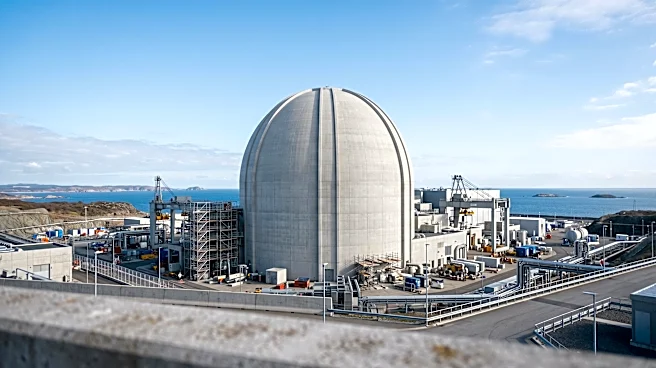
The Philippine government is exploring the revival of the Bataan Nuclear Power Plant, a facility completed in 1984 but never activated. This consideration comes as the country seeks to diversify its energy sources and guard against global energy shocks,
similar to the motivations behind its initial construction in the 1970s under President Ferdinand Marcos Sr. The plant, located on a peninsula across the bay from Manila, was designed to produce 621 megawatts. Its construction was halted and the plant mothballed due to safety concerns following the Three Mile Island accident in the U.S. and allegations of corruption. Despite being inactive for decades, the current administration, led by President Ferdinand Marcos Jr., is commissioning studies to assess the feasibility of bringing the plant online. A 2017 study by Korea Hydro and Nuclear Power Co. estimated that approximately a quarter of the plant's equipment would need replacement, costing around $1 billion. While the Energy Department initially aimed for nuclear power generation by 2032, this timeline has been extended to potentially 2038 as other options are evaluated.
Why It's Important?
The potential revival of the Bataan Nuclear Power Plant holds significant implications for the Philippines' energy landscape and economic stability. For a country heavily reliant on imported energy, bringing a nuclear plant online could provide a stable, large-scale power source, reducing vulnerability to volatile global oil markets and enhancing energy security. This move could also contribute to the nation's long-term development goals by providing consistent power for industrial growth and urban expansion. However, the project faces substantial challenges, including the high cost of refurbishment, estimated at over $1 billion, and the need to rebuild public trust given the plant's controversial history of corruption allegations and safety concerns. The initial construction was plagued by accusations of illegal payments and its operational status was further complicated by the Chernobyl disaster. The decision to proceed would require significant financial investment and a robust regulatory framework to ensure safety, potentially diverting resources from other critical infrastructure projects. The project's success or failure could set a precedent for other developing nations considering nuclear power as a solution to energy demands.
What's Next?
The Philippine government is currently evaluating the findings of a feasibility study conducted by Korea Hydro and Nuclear Power Co. on the Bataan Nuclear Power Plant. While the study's results have not been publicly disclosed, the Energy Department is considering various options, including the plant's revival or the development of new nuclear facilities at different sites. If the decision is made to proceed with the Bataan plant, a significant refit and upgrade process, estimated to take several years, would be necessary. This would involve securing substantial funding, likely over $1 billion, and addressing public concerns regarding safety and environmental impact. The government will also need to develop a comprehensive plan for training and retaining a skilled workforce to operate and maintain the plant, as many original engineers left the country for higher-paying jobs after the plant was mothballed. Public opinion, with a 2024 survey indicating over 70% support for nuclear power, will likely play a role in the final decision, but historical skepticism and potential protests from anti-nuclear groups could still emerge.
Beyond the Headlines
The debate surrounding the Bataan Nuclear Power Plant extends beyond immediate energy needs, touching upon deeper issues of national sovereignty, historical memory, and technological ambition. The plant symbolizes a complex legacy of the Marcos Sr. era, marked by both ambitious development projects and widespread corruption. Its potential revival forces a reckoning with this past, as the current administration seeks to leverage a controversial asset for future prosperity. Ethically, the decision involves balancing the urgent need for energy with the long-term risks associated with nuclear power, particularly in a seismically active region. Culturally, the plant's history has fueled a strong anti-nuclear movement, and any move to reactivate it would require significant public education and assurance campaigns to overcome ingrained fears and distrust. The project also highlights the broader global trend of nations re-evaluating nuclear energy in the face of climate change and geopolitical instability, demonstrating the enduring tension between energy security, economic development, and environmental and safety concerns.