








What's Happening?
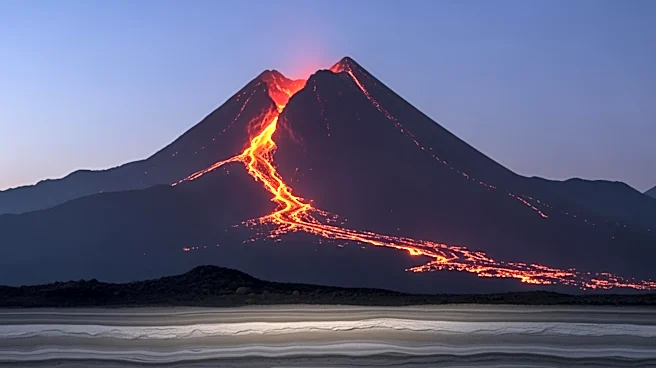
Researchers from the University of Arizona have uncovered a significant link between volcanic activity in the Andes and climate changes during the Miocene Epoch. The study, published in Nature Communications Earth & Environment, reveals that volcanic eruptions
in the Andes released vast amounts of nutrients into the ocean, particularly iron, which spurred the growth of diatoms. These single-celled algae are a primary food source for marine life, including whales. The increased diatom activity led to algal blooms that removed carbon dioxide from the atmosphere, contributing to global cooling. This research highlights the role of Andean volcanism in altering ocean chemistry and impacting marine ecosystems, ultimately affecting global climate patterns.
Why It's Important?
The findings of this study are crucial for understanding the natural processes that regulate Earth's climate. By identifying the connections between volcanic activity, ocean productivity, and carbon dioxide levels, the research provides insights into mechanisms that influence global climate over long periods. This knowledge is directly relevant to anticipating future climate change and its impacts on society. The study underscores the importance of natural nutrient cycles in the ocean and their potential to drive significant ecological and climatic shifts. It also highlights the complex interactions between geological and biological processes that have shaped Earth's climate history.
What's Next?
The study opens new avenues for research into the role of volcanism in climate regulation. Future investigations may focus on other regions with significant volcanic activity to determine if similar processes have occurred elsewhere. Additionally, the findings could inform climate models that predict future changes by incorporating the effects of natural nutrient cycles. Understanding these processes may help scientists develop strategies to mitigate the impacts of climate change by leveraging natural mechanisms for carbon sequestration.
Beyond the Headlines
This research challenges the traditional view of volcanism as primarily a source of atmospheric carbon dioxide. Instead, it highlights the dual role of volcanic activity in both contributing to and mitigating climate change. The study also emphasizes the importance of interdisciplinary collaboration, combining expertise in climate modeling, ocean geochemistry, and paleobiology to unravel complex environmental phenomena. These insights could lead to a reevaluation of how natural processes are integrated into climate policy and conservation efforts.