








What's Happening?
The Kenya Defence Forces (KDF) and the Jordanian Armed Forces are in discussions to expand their defense cooperation, focusing on specialized military training in counterterrorism, drone operations, and counter-drone capabilities. These discussions took
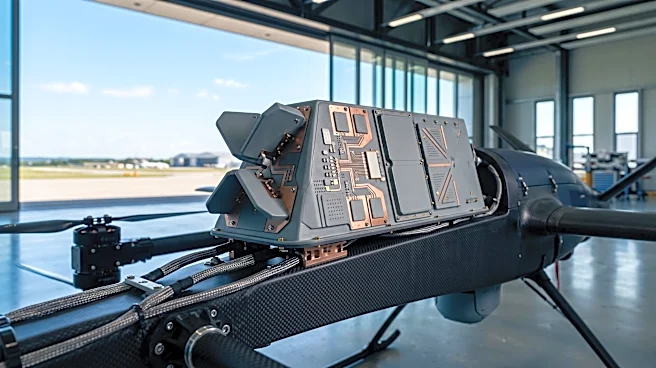
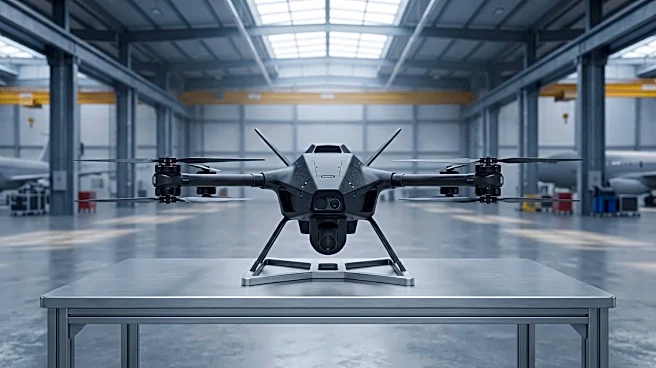
place during a meeting between Deputy Army Commander Major General John Nkoimo and the Chief of the Jordanian Armed Forces, Major General Majdi Al-Harasis, in Aqaba, Jordan. While no formal agreement or timeline has been announced, the proposed areas of training underscore the increasing importance of unmanned aerial vehicles (UAVs) in modern warfare. Militaries worldwide are investing in systems to detect, disrupt, and neutralize hostile drones, which are used for surveillance, intelligence gathering, and attacks on military positions and critical infrastructure. The discussions occurred during the 15th Special Operations Forces Exhibition and Conference (SOFEX), where various defense technologies, including UAVs and counter-drone systems, were showcased.
Why It's Important?
The collaboration between the KDF and Jordanian Armed Forces on drone warfare training highlights a global trend towards integrating advanced technology into military operations. For the U.S., this development is significant as it indicates a growing international focus on counter-drone capabilities, an area where the U.S. military is also heavily invested. The proliferation of drone technology means that U.S. forces operating abroad, particularly in regions like Africa and the Middle East, will increasingly encounter adversaries utilizing similar systems. Therefore, understanding the training and operational advancements of allied nations in this domain can inform U.S. defense strategies and partnerships. Furthermore, the emphasis on counterterrorism training alongside drone operations reflects the evolving nature of threats, where non-state actors are also leveraging drone technology, posing complex challenges for global security.
What's Next?
Should the KDF and Jordanian Armed Forces formalize their specialized training programs, it would likely lead to enhanced capabilities in drone operations and counter-drone measures for both nations. This could involve joint exercises, knowledge sharing, and the adoption of new technologies. For the broader international community, this collaboration could serve as a model for other countries seeking to bolster their defenses against drone threats. The U.S. may find opportunities to engage with these nations through joint training or technology transfer programs, further strengthening alliances and promoting interoperability. The continued focus on drone warfare at events like SOFEX suggests that innovation in this field will remain a priority, driving further research and development in unmanned systems and their countermeasures.
Beyond the Headlines
The increasing emphasis on drone warfare training, as seen in the KDF-Jordanian discussions, points to a fundamental shift in military doctrine globally. The accessibility and versatility of drones are democratizing aerial capabilities, allowing both state and non-state actors to conduct surveillance and attacks with relative ease. This raises ethical and legal questions regarding the use of autonomous weapons systems and the potential for unintended escalation. The development of sophisticated counter-drone technologies also creates a new arms race, where nations must continuously innovate to maintain a defensive edge. Moreover, the integration of drone operations into counterterrorism efforts highlights the complex challenges of asymmetric warfare, where traditional military advantages may be mitigated by technological advancements, prompting a re-evaluation of international security frameworks.