


What's Happening?
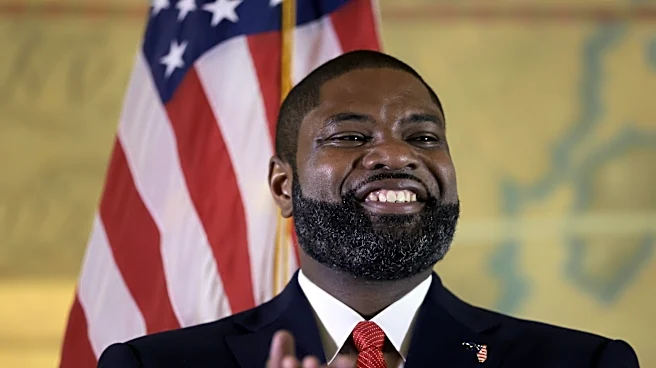
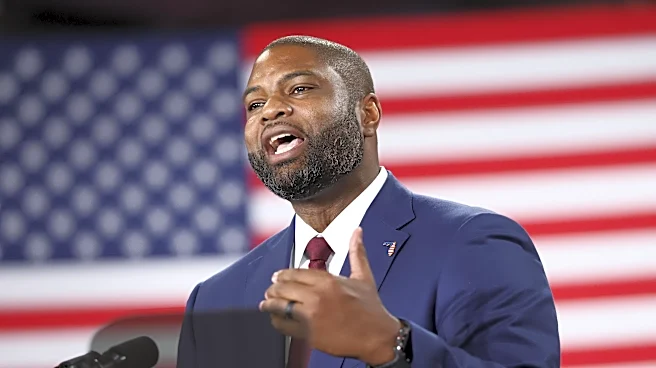
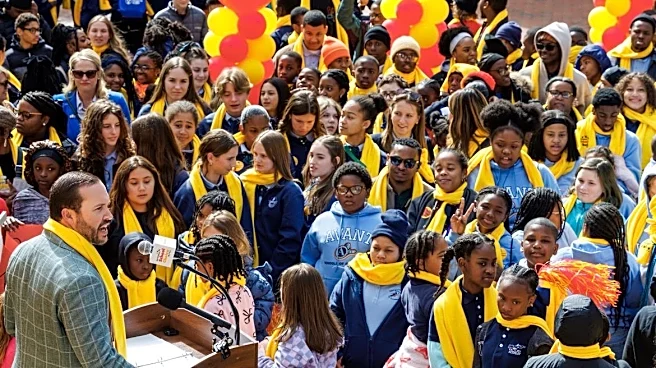
Florida Governor-elect Byron Donalds recently addressed the State University System Board of Governors 2026 Trustee Summit, where he detailed his vision for the state's higher education system. Donalds underscored the importance of maintaining Florida's
No. 1 ranking in higher education by U.S. News & World Report, viewing it as a responsibility rather than an achievement to rest upon. He stressed that universities should prioritize students' economic futures, aiming for higher education to be a pathway to upward mobility instead of a source of lifelong debt. Donalds also advocated for universities to foster civil discourse and protect free speech, praising the state's performance-based funding model. Furthermore, he highlighted the need for Florida degrees to retain intellectual rigor amidst the advancements in artificial intelligence and for state universities to continue attracting top faculty and securing research grants. His views align closely with those of Governor Ron DeSantis, focusing on preparing students for the professional world.
Why It's Important?
Governor-elect Donalds' outlined priorities signal a continued focus on accountability and economic outcomes within Florida's higher education system. His emphasis on upward economic mobility for students suggests that state funding and policy decisions will likely be geared towards programs that demonstrate clear career pathways and return on investment for graduates. This approach could influence curriculum development, resource allocation, and institutional performance metrics across Florida's 13 public universities. The call for fostering civil discourse and protecting free speech within universities is significant, as it addresses ongoing national debates about academic freedom and ideological diversity on campuses. This stance could lead to policies that reinforce open dialogue and diverse viewpoints, potentially impacting campus culture and academic programming. Additionally, his attention to artificial intelligence's role in education indicates a proactive approach to ensuring Florida's graduates are competitive in an evolving job market, which could drive investment in technology and innovation within the university system.
What's Next?
Following Governor-elect Donalds' address, Florida's higher education institutions and the State University System Board of Governors will likely begin to align their strategic plans and initiatives with his stated priorities. This could involve a review of existing programs to ensure they meet the goal of fostering economic mobility for students. Universities may also explore new ways to integrate AI into their curricula and research efforts to maintain the intellectual rigor of Florida degrees. The emphasis on civil discourse and free speech may lead to new guidelines or reinforced policies aimed at promoting respectful debate on campuses. Furthermore, Donalds' opposition to federal initiatives regulating college sports suggests potential state-level resistance or alternative approaches to managing collegiate athletics, particularly concerning name, image, and likeness (NIL) policies. The incoming administration will likely work with university leaders to implement these visions, potentially influencing legislative agendas related to education funding and policy in the coming years.
Beyond the Headlines
The Governor-elect's focus on higher education as an engine for upward economic mobility reflects a broader national conversation about the value and affordability of a college degree. By framing education as a means to avoid 'lifelong debt,' Donalds taps into public concerns about student loan burdens and the practical utility of academic pursuits. This perspective could lead to a re-evaluation of traditional academic models, potentially favoring vocational and STEM-focused programs that directly feed into high-demand industries. The emphasis on intellectual rigor in the age of AI also highlights the ethical and practical challenges universities face in adapting to rapidly advancing technology while maintaining educational quality. This could spark deeper discussions about academic integrity, the role of critical thinking, and the future of work. Moreover, the call for civil discourse and free speech on campuses touches upon fundamental principles of democratic society, suggesting a desire to cultivate environments where diverse ideas can be debated constructively, potentially influencing the intellectual climate of Florida's public universities for years to come.