








What's Happening?
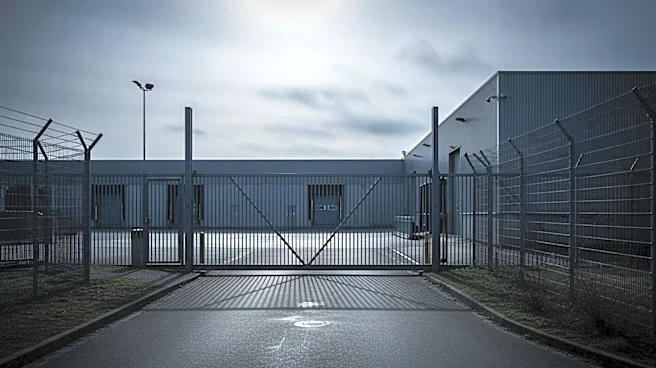
Salt Lake City and Salt Lake County have filed a lawsuit against the Department of Homeland Security (DHS) to block the establishment of a large immigrant detention warehouse. The facility, intended to detain up to 10,000 immigrants, is part of a broader
DHS initiative to convert industrial warehouses into regional processing and detention centers. The lawsuit claims that DHS violated federal law by not conducting necessary environmental reviews or consulting with local officials before purchasing the property. The $145.4 million warehouse, which is the most expensive in the DHS plan, is located in Salt Lake City and is roughly the size of 15 football fields. Local leaders, including Salt Lake City Mayor Erin Mendenhall and Salt Lake County Mayor Jenny Wilson, argue that the facility would strain local resources, including water supplies and public infrastructure, and pose public health risks.
Why It's Important?
The lawsuit highlights significant local opposition to federal immigration detention policies, particularly concerning the environmental and social impacts of such large-scale facilities. The case is part of a growing national trend where local governments are challenging federal plans that they believe could harm their communities. The outcome of this lawsuit could influence how DHS and other federal agencies engage with local governments in future projects, potentially leading to more stringent environmental and community impact assessments. Additionally, the legal challenges could delay or alter the implementation of DHS's broader detention strategy, affecting immigration enforcement and processing across the U.S.
What's Next?
The lawsuit in Utah is one of several legal challenges DHS faces regarding its warehouse detention model. Similar cases in states like Pennsylvania, Maryland, and New Jersey have already resulted in temporary halts or required additional environmental assessments. As the legal proceedings unfold, DHS may need to reassess its approach to expanding detention facilities, possibly leading to policy changes or increased collaboration with local governments. Advocacy groups like Uproar Utah are also mobilizing to increase public awareness and opposition to the warehouse plan, which could further influence the legal and political landscape surrounding immigration detention in the U.S.