



What's Happening?
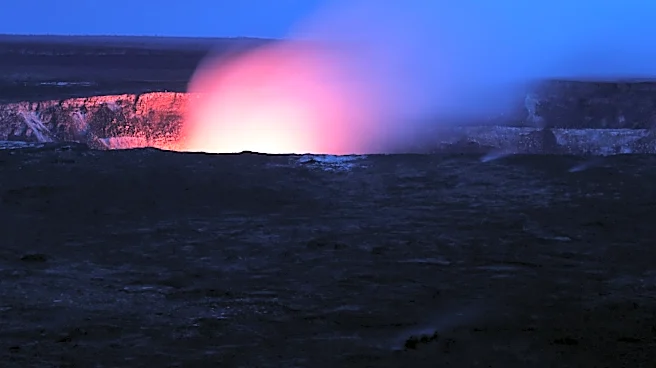
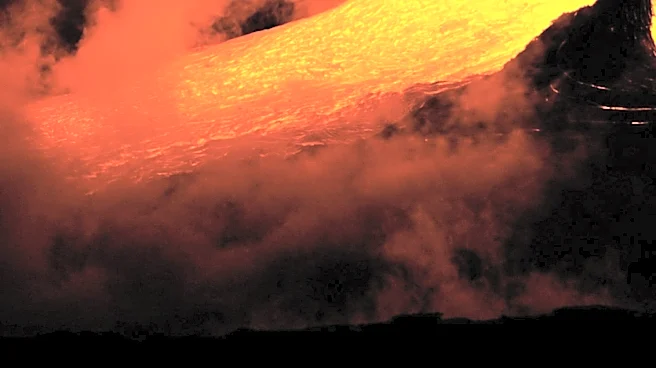
The Kīlauea volcano in Hawaii has entered its 52nd eruptive episode, marked by sustained lava fountaining from the north vent inside the Halemaʻumaʻu crater. This activity prompted the U.S. Geological Survey's Hawaiian Volcano Observatory to elevate the volcano's
Alert Level from ADVISORY to WATCH and its Aviation Color Code from YELLOW to ORANGE. The eruption began on July 28, 2026, with lava fountains initially reaching heights of 30 meters, escalating to 90 meters within a short period. The eruption has resulted in lava flows covering approximately 10% of the crater floor. The observatory has warned of potential hazards, including volcanic gases and ash, which could affect nearby areas.
Why It's Important?
The eruption of Kīlauea is significant due to its potential impact on local communities and the environment. Volcanic gases, such as sulfur dioxide, can lead to respiratory issues, while ash and tephra can cause skin and eye irritation. The eruption also poses risks to aviation, as volcanic ash can damage aircraft engines. The ongoing volcanic activity highlights the need for continuous monitoring and preparedness to mitigate potential hazards. The eruption's impact on tourism, a vital part of Hawaii's economy, could be substantial if the situation escalates.
What's Next?
The Hawaiian Volcano Observatory will continue to monitor the eruption closely, providing updates on any changes in activity. Local authorities may implement additional safety measures to protect residents and visitors. The potential for further escalation of the eruption could lead to more extensive evacuations and disruptions. Scientists will study the eruption to better understand volcanic behavior and improve predictive models for future events.